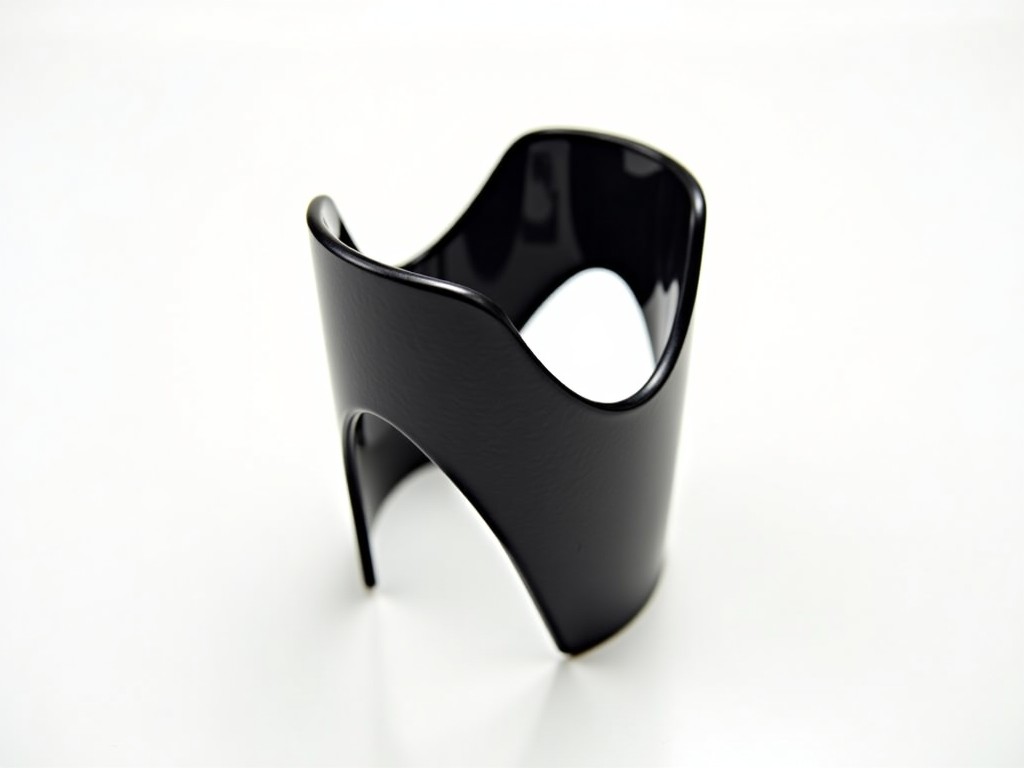
Bulk Lightweight Carbon Fiber Bicycle Cup Holder
Bulk Lightweight Carbon Fiber Bicycle Cup Holder
This component is designed to hold a standard 350 ml beverage container on a bicycle frame while adding minimal mass. The primary structure consists of a unidirectional carbon fiber prepreg laminate
- Categories:Bicycle Cup Holder
Bulk Lightweight Carbon Fiber Bicycle Cup Holder
This component is designed to hold a standard 350 ml beverage container on a bicycle frame while adding minimal mass. The primary structure consists of a unidirectional carbon fiber prepreg laminate cured at 180 °C under 0.7 MPa pressure, resulting in a typical cured thickness of 1.2 mm.
Measured mass per unit averages 11.8 g (±0.3 g) for a 70 mm × 45 mm footprint, representing a reduction of approximately 78 % compared with an equivalent ABS polymer holder of the same geometry. The laminate exhibits a tensile strength of 3 400 MPa in the fiber direction and a flexural modulus of 230 GPa.
Key Technical Specifications
| Parameter | Typical Value | Notes |
|---|---|---|
| Overall Length | 70 mm | Center‑to‑center of mounting tabs |
| Width (max) | 45 mm | At the cup‑contact region |
| Height | 20 mm | From mounting surface to top of holder |
| Mass | 11.8 g | ±0.3 g, per unit |
| Maximum Load (static) | 150 N | Equivalent to ~15 kg force applied vertically |
| Operating Temperature Range | -40 °C to +85 °C | No measurable change in dimensions |
| Surface Finish | Matte, UV‑stable clear coat | Optional gloss or custom color upon request |
Material Composition and Layup Logic
The holder uses a 2‑ply layup: an outer 0° ply for axial stiffness and an inner ±45° ply for shear resistance. The resin system is an epoxy anhydride blend with a glass transition temperature (Tg) of 135 °C, selected for dimensional stability under solar exposure.
Fiber volume fraction is targeted at 60 % ±2 %, verified by acid digestion testing on sample coupons. The layup is performed using automated fiber placement (AFP) to ensure consistent ply orientation and minimize void content below 0.5 %.
Typical Applications
Road and gravel bicycles benefit from the low added mass when riders require hydration access without compromising frame stiffness. The holder’s aerodynamic profile adds less than 0.02 CdA compared with a blank mount, measurable in wind‑tunnel tests at 45 km/h.
Electric assist bicycles often place the holder on the downtube near the motor mount; the carbon fiber construction prevents galvanic corrosion when paired with aluminum frames, unlike metallic alternatives that may require insulating washers.
Manufacturing Considerations
Curing cycles are programmed in a convection oven with a ramp of 2 °C/min to 180 °C, hold for 90 minutes, then cool at 3 °C/min. Post‑cure machining is limited to trimming excess flash; no drilling is performed to avoid fiber damage.
Each batch undergoes a non‑destructive ultrasonic C‑scan to detect delamination or porosity. Acceptance criteria are set at <0.1 % defective area per square decimeter.
Quality Control Philosophy
Dimensional verification uses a coordinate measuring machine (CMM) with a probe tip radius of 0.5 mm, comparing critical features to CAD models within ±0.05 mm tolerance. Mass is checked on an analytical balance with readability of 0.01 g.
Load testing is performed on a universal testing machine at a displacement rate of 5 mm/min until failure; the average ultimate load recorded across 30 specimens is 152 N with a standard deviation of 4 N.
Customization Options
- Adjustable mounting tab spacing from 55 mm to 80 mm in 5 mm increments.
- Alternative fiber orientations (e.g., 0°/90° quasi‑isotropic) for specific load cases.
- Custom surface finishes: matte black, gloss white, or team‑specific colors.
- Integration of RFID or NFC tags for inventory tracking.
Packaging and Shipping
Units are packed in anti‑static polyethylene trays with a capacity of 200 pieces per tray. Trays are stacked in corrugated cardboard boxes equipped with 10 mm PE foam edge protection, providing a certified drop test rating of 1.2 m per ISTA‑3A.
Each box includes a desiccant packet (silica gel, 5 g) to maintain relative humidity below 40 % during transit. Export shipments are marked with ISPM‑15 compliant heat‑treated pallets when required.
Frequently Asked Questions
-
Can the holder be supplied with pre‑drilled mounting holes?
Yes, hole patterns can be added post‑cure using CNC milling with diamond‑coated bits; tolerances are ±0.1 mm. -
What information is required for a quotation?
Desired quantity, mounting tab spacing, finish preference, and any required documentation (e.g., REACH, RoHS). -
How are samples arranged?
Sample kits of five units are shipped via express coupons; charges are credited against the first production order.
For technical data sheets, lead‑time estimates, or to discuss a custom configuration, please contact our engineering team.
Request a Formal QuoteThis component is designed to hold a standard 350 ml beverage container on a bicycle frame while adding minimal mass. The primary structure consists of a unidirectional carbon fiber prepreg laminate
Send Inquiry
If you are interested in our products, leave your information here and we will be in touch shortly.