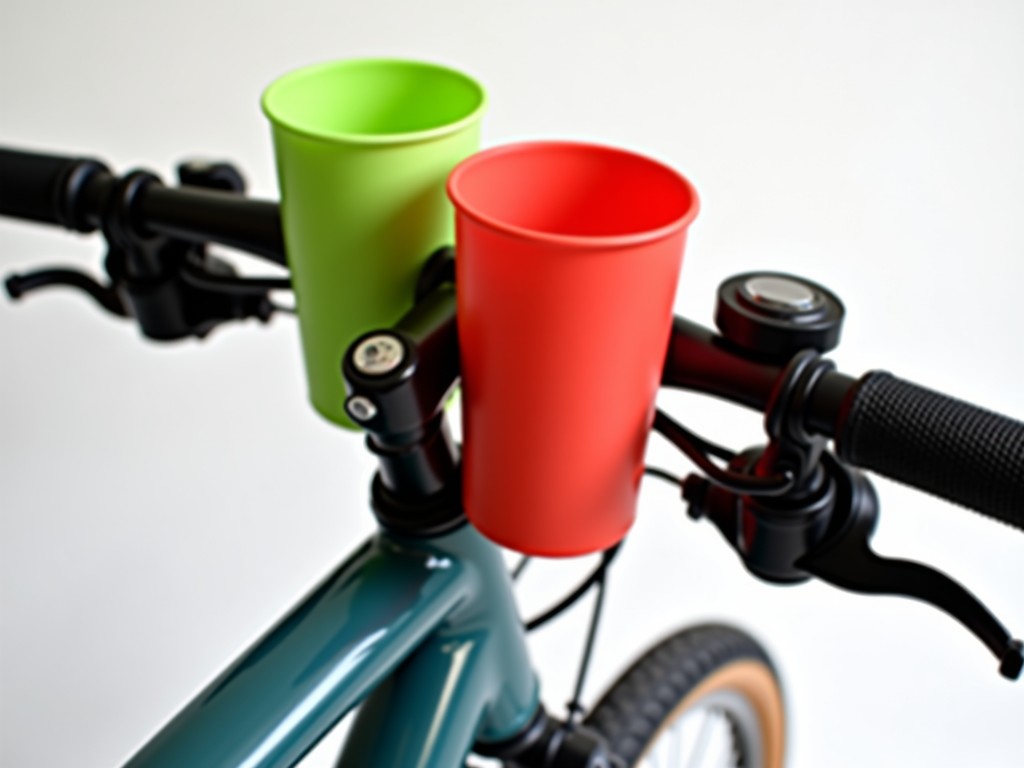
Custom Silicone Handlebar Bicycle Cup Holder Producer
Custom Silicone Handlebar Bicycle Cup Holder Producer
When a cyclist needs a secure place for a water bottle or energy drink, the interface between the handlebar and the accessory must resist vibration, temperature swings, and repeated impacts while
- Categories:Bicycle Cup Holder
Custom Silicone Handlebar Bicycle Cup Holder – Manufacturer Overview
When a cyclist needs a secure place for a water bottle or energy drink, the interface between the handlebar and the accessory must resist vibration, temperature swings, and repeated impacts while adding minimal weight. A silicone‑based cup holder meets these requirements because the elastomer can be formulated to absorb shocks, maintain grip across –20 °C to +80 °C, and resist UV degradation without cracking.
Material Selection and Performance Characteristics
The base polymer is a platinum‑cured silicone rubber, chosen for its low compression set (<5 % after 24 h at 70 °C) and high tear strength (>8 kN/m). Durometer can be tuned between 30 A and 60 A depending on the desired balance of flexibility and load‑bearing capacity. Additives such as silica reinforcement improve abrasion resistance, while UV stabilizers extend outdoor service life beyond 2 years under direct sunlight.
Design Flexibility and Customization Options
Geometry is defined by the customer’s handlebar diameter, mounting angle, and cup depth. Typical outer diameters range from 22 mm to 32 mm to fit standard road, mountain, and hybrid bars. The holder can incorporate internal ribs for bottle retention, external flanges for clamp integration, or recessed channels for cable routing. Wall thickness is adjustable from 2 mm to 4 mm to tune stiffness without exceeding a weight increase of more than 5 g per unit.
- Handlebar clamp diameter: 22 mm, 25.4 mm, 31.8 mm, custom
- Cup depth: 30 mm to 50 mm (adjustable in 2 mm steps)
- Mounting orientation: 0°, 15°, 30° relative to bar axis
- Surface finish: smooth, textured, or branded logo emboss
- Color options: transparent, opaque, custom Pantone match
Manufacturing Process and Tolerances
Parts are produced via injection molding using precision‑machined steel molds with surface roughness Ra < 0.8 µm to achieve a seamless silicone finish. Shot weight is controlled within ±0.5 g, and dimensional tolerances follow ISO 2768‑m (±0.2 mm for features under 10 mm, ±0.3 mm for larger dimensions). Post‑mold curing at 200 °C for 30 min stabilizes the polymer network and reduces extractables.
Quality Assurance and Inspection
Each batch undergoes visual inspection for flash, surface defects, and color consistency. Critical dimensions are verified with a coordinate measuring machine (CMM) on a sampling basis of 1 per 500 pieces. Hardness is checked with a Shore A durometer gauge (±1 A). A compression set test per ASTM D395 is performed on a representative sample to confirm long‑term elasticity.
Typical Applications in Cycling and Outdoor Equipment
Beyond standard bottle holders, the same silicone geometry serves as a vibration‑isolating mount for GPS units, smartphone cradles, and lightweight tool pouches. The material’s resistance to sweat, sunscreen, and mild alkaline cleaners makes it suitable for triathlon transition areas where equipment is frequently exposed to harsh conditions. Because silicone does not corrode aluminum or carbon fiber, it protects the handlebar finish while providing a non‑slip interface.
Technical Specifications (Typical Values)
| Parameter | Typical Range | Notes |
|---|---|---|
| Durometer (Shore A) | 30 – 60 | Adjustable per load requirement |
| Temperature Range | –20 °C to +80 °C | Continuous use |
| Compression Set (24 h @ 70 °C) | <5 % | ASTM D395 Method B |
| Tensile Strength | ≥ 6 MPa | ASTM D412 |
| Weight (25 mm clamp, 40 mm cup) | 12 g ± 1 g | Depends on wall thickness |
Frequently Asked Questions
- Can dimensions be customized? Yes, handlebar clamp diameter, cup depth, and wall thickness are all adjustable to match specific bar sizes and bottle volumes.
- What information is required before quotation? We need the target handlebar diameter, desired cup volume, preferred durometer, any branding or surface texture, and estimated annual quantity.
- What materials are available? Platinum‑cured silicone rubber with optional silica reinforcement, UV stabilizers, and color pigments. Alternative grades (high‑temp, low‑extractable) can be quoted upon request.
- How is quality inspected? Incoming material is checked with FTIR, molded parts receive visual and dimensional CMM checks, hardness testing, and compression set validation on a statistical basis.
- What packaging methods are available? Parts are packed in anti‑static trays, sealed in polyethylene bags, and placed in corrugated cartons with desiccant packs. Custom labeling and palletization are offered.
- How are export shipments protected? Cartons are strapped, corner‑protected, and marked with handling symbols. For sea freight, moisture‑barrier liners are added.
- What is the typical production lead time? Tooling typically takes 4‑6 weeks; first‑article approval adds 1‑2 weeks. Production lead time ranges from 2‑4 weeks depending on order size.
- How are samples arranged? We can ship up to three prototype units via express coupons after design confirmation; shipping costs are borne by the requester.
Next Steps
If you need a silicone handlebar cup holder that meets specific dimensional, mechanical, or environmental criteria, share your application details and we will prepare a feasibility review, including draft CAD models and a preliminary quotation.
Contact our engineering teamWhen a cyclist needs a secure place for a water bottle or energy drink, the interface between the handlebar and the accessory must resist vibration, temperature swings, and repeated impacts while
Send Inquiry
If you are interested in our products, leave your information here and we will be in touch shortly.