Bulk High Lumen Bicycle Front Light Supplier
Bulk High Lumen Bicycle Front Light Supplier
Procurement engineers and OEM buyers seeking front illumination for bicycles evaluate light output, durability, and integration ease when ordering in volume. This overview details the measurable
- Categories:Bicycle Front Light
Bulk High Lumen Bicycle Front Light Supplier
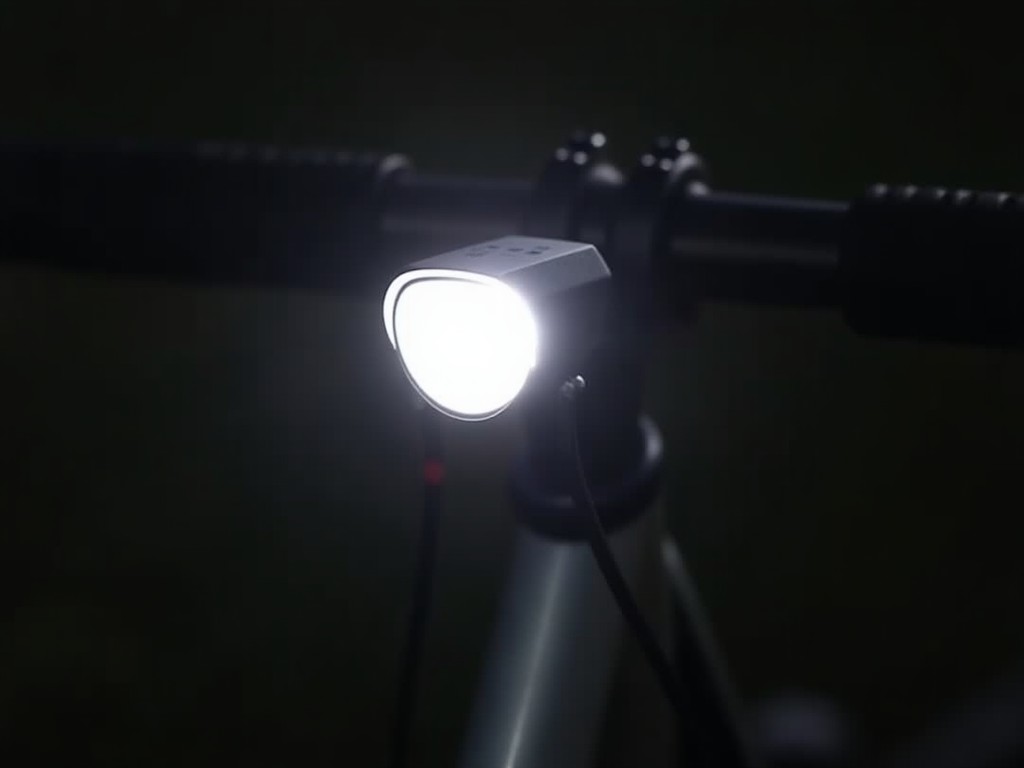
Procurement engineers and OEM buyers seeking front illumination for bicycles evaluate light output, durability, and integration ease when ordering in volume. This overview details the measurable attributes that define a high‑lumen front lamp suitable for large‑scale assembly and distribution channels.
Key Technical Parameters
| Parameter | Typical Value |
|---|---|
| Luminous Flux | 1200 lm – 2500 lm (selectable) |
| Peak Intensity | 8000 cd – 18000 cd |
| Beam Angle (FWHM) | 10° – 15° spot with 30° – 45° spill |
| LED Type | High‑power XML‑2 or XHP70.2, 3 V‑3.6 V Vf |
| Drive Current | Constant current 1.0 A – 2.5 A, PWM dimming 0‑100 % |
| Operating Voltage | 6 V – 8.4 V (Li‑ion pack) or 12 V DC (hub‑dynamo) |
| Battery Capacity (integrated) | 2600 mAh – 5000 mAh Li‑ion, 2 h – 6 h runtime at max lumen |
| IP Rating | IP67 (dust‑tight, immersion 1 m 30 min) |
| Temperature Range | ‑20 °C to +50 °C (storage ‑30 °C to +70 °C) |
| Dimensions (L×W×H) | 92 mm × 32 mm × 28 mm (head unit) |
| Weight | 85 g (head only), 180 g with battery mount |
| Mounting Interface | M5 screw hole, Ø22 mm handlebar clamp, optional GoPro‑style adapter |
Thermal Management and Drive Electronics
High lumen output generates significant junction temperature in the LED die. The design incorporates a machined aluminium heat sink with a finite‑element‑validated fin density of 12 fins/cm², providing a thermal resistance of ≤2.5 °C/W. A constant‑current driver employs a buck‑topology with feedback loop bandwidth of 20 kHz, maintaining current ripple below 5 % to avoid perceptible flicker. Pulse‑width modulation is available for dimming without shifting the LED colour temperature.
Material Selection and Construction
The outer housing is fabricated from 6063‑T5 aluminium alloy, offering a tensile strength of ≥210 MPa and corrosion resistance after anodisation (12 µm thickness). The primary lens uses optically clear polycarbonate with a UV‑stabilised hard coat, achieving a transmission of 92 % at 450 nm and impact resistance per ISO 16750‑2. Silicone O‑rings seal the housing‑lens interface, validated for 1000 h humidity cycling at 85 % RH/85 °C.
Internal PCB is FR‑4 with 2 oz copper layers, conformal coated (acrylic) to protect against condensation. Cable entry uses a strain‑relief over‑molded TPU boot, rated for 5 kg pull force and 10 000 flex cycles.
Applications in the Cycling Industry
Night‑time commuting and trail riding demand illumination that exceeds the ambient glare of urban environments while preserving battery endurance. A front lamp delivering ≥1500 lm with a focused spot enables early obstacle detection at speeds over 25 km/h, reducing reaction time by approximately 0.3 s compared with sub‑800 lm units. Off‑road enthusiasts benefit from a wide spill component that illuminates the immediate trail periphery, improving depth perception on uneven terrain.
For OEMs supplying complete bicycles, integrating a standardized mounting interface simplifies frame design and reduces part‑count. Distributors serving regional bike shops value a product line that offers interchangeable battery packs and optional accessories, allowing a single SKU to address multiple customer segments without additional tooling.
Customization Options
- Luminous flux tiers: 1200 lm, 1800 lm, 2400 lm, 2500 lm (driver re‑program)
- Beam pattern choices: narrow spot, dual‑spot, wide flood, asymmetric off‑road
- Battery configurations: internal Li‑ion, external pouch, hub‑dynamo regulator
- Mounting brackets: handlebar clamp, fork‑leg mount, helmet‑adapter
- Cable lengths: 150 mm, 300 mm, 500 mm with optional right‑angle connectors
- Connector types: JST‑PH, Molex Pico‑Lock, DC barrel, USB‑C for charging
- Housing finishes: black anodise, natural aluminium, custom powder‑coat colours
- Branding: laser‑etched logo, silk‑screened label, custom colour‑filled engraving
Quality Assurance and Testing
Incoming inspection validates LED binning (chromaticity within a 3‑step MacAdam ellipse) and forward voltage distribution. Each unit undergoes a 48‑hour burn‑in at 40 °C ambient, followed by lumen maintenance measurement; the design targets L70 ≥ 5000 h at 85 °C case temperature. Waterproof integrity is confirmed by IEC 60529 IP67 testing (submersion 1 m for 30 min) and a subsequent pressure‑pulse test at 2 bar.
Mechanical robustness is evaluated per ISO 16750‑3: random vibration 5 Hz‑2 kHz, 0.04 g²/Hz, shock 30 g half‑sine 11 ms, and drop test from 1.5 m onto concrete. Functional testing includes verifying constant current regulation across the full voltage range, checking PWM linearity, and measuring beam pattern uniformity with a goniophotometer.
Final audit incorporates a sample‑size‑based AQL 0.65 for visual defects and a 100 % functional check before packaging. Documentation provides a test report traceable by serial number, supporting ISO 9001‑aligned quality records.
Ordering Information and Lead Times
Minimum order quantity for standard configurations is 500 units. Sample units (up to 5 pcs) are available within 7‑10 working days after receipt of technical specifications and NDA. Production lead time for the first batch ranges from 20‑25 working days, depending on selected customizations and material availability. Subsequent repeat orders typically ship within 15‑18 working days.
Packaging options include anti‑static ESD trays for PCB protection, corrugated cartons with 5 mm foam inserts, or palletised bulk packs for containerised shipment. Each carton carries a label showing part number, lot code, and QR‑code linking to the online test dossier.
Frequently Asked Questions
- Can the luminous flux be adjusted after production? Yes, the driver supports firmware re‑programming via a two‑wire UART interface, allowing field adjustment between the predefined flux bins without hardware changes.
- What information is required to obtain a quotation? Required details include desired lumen tier, beam pattern, battery type, mounting interface, cable length, connector preference, and any branding or coating specifications.
- Which materials are available for the housing? Standard is 6063‑T5 aluminium with clear anodise; alternative options include die‑cast zinc‑alum alloy for lower cost or stainless‑steel 304 for marine environments, subject to tooling.
- How is quality inspected for bulk orders? Every lot undergoes incoming LED verification, 48‑hour burn‑in, lumen measurement, IP67 waterproof test, vibration/shock verification, and 100 % functional final test before packing.
- What are the typical export shipping protections? Units are packed in moisture‑barrier bags with desiccant, placed in foam‑lined cartons, and secured on pallets with stretch film and corner guards to withstand multi‑modal transport.
Procurement engineers and OEM buyers seeking front illumination for bicycles evaluate light output, durability, and integration ease when ordering in volume. This overview details the measurable
Send Inquiry
If you are interested in our products, leave your information here and we will be in touch shortly.