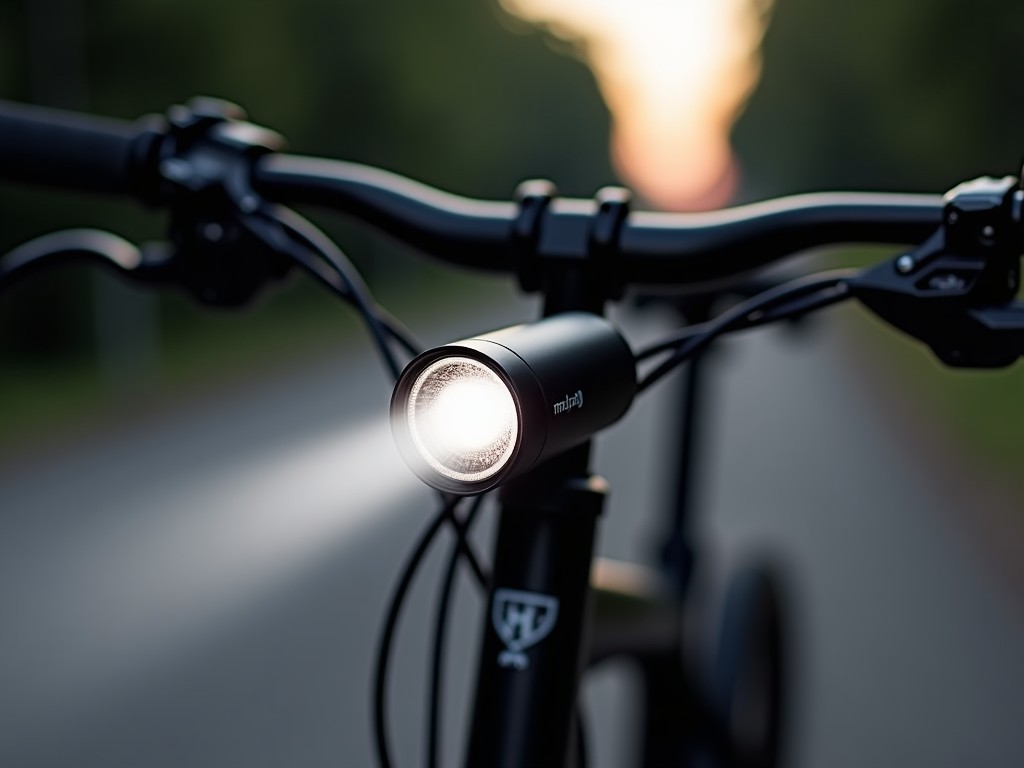
Bulk Rechargeable Commuter Bicycle Front Light
Bulk Rechargeable Commuter Bicycle Front Light
This section describes the core performance parameters that define the suitability of a front light for high‑volume commuter bicycle applications. Parameter Typical Value Notes Luminous flux 800 lm
- Categories:Bicycle Front Light
Bulk Rechargeable Commuter Bicycle Front Light
This section describes the core performance parameters that define the suitability of a front light for high‑volume commuter bicycle applications.
Technical Specifications
| Parameter | Typical Value | Notes |
|---|---|---|
| Luminous flux | 800 lm | Measured at max steady output |
| Battery capacity | 5000 mAh Li‑ion | USB‑C charging |
| Charge time | 4 h | From 0 % to 100 % |
| Run time (max) | 6 h | At 800 lm |
| Ingress protection | IP65 | Dust‑tight, protected against water jets |
| Operating temperature | ‑20 °C to 45 °C | Ambient |
| Mounting clamp diameter | 22‑32 mm | Fits most commuter fork crowns |
Applications in Commuter Fleets
Commuter bicycle fleets require lighting that delivers consistent illumination over varied urban routes while withstanding frequent handling and exposure to weather.
The 800 lm output provides sufficient visibility for riders traveling at 20‑25 km/h on unlit streets, meeting typical municipal safety guidelines for front lighting.
A rechargeable Li‑ion pack eliminates the need for disposable batteries, reducing operational waste and simplifying logistics for large‑scale deployments.
IP65 sealing protects the electronics from rain splashes and dust accumulation, extending service life in environments where lights are washed or left outdoors overnight.
Design and Construction
The housing is fabricated from extruded aluminum alloy (6063‑T5) with a wall thickness of 1.2 mm, providing rigidity while keeping mass under 120 g.
Optical system uses a polycarbonate lens with a patterned reflector to achieve a batwing beam shape, directing light onto the road surface and minimizing glare for on‑coming traffic.
Thermal management relies on a conductive pad that transfers heat from the LED die to the aluminum body, maintaining junction temperature below 85 °C during continuous operation.
The mounting bracket incorporates a stainless‑steel quick‑release lever, allowing tool‑free installation on fork crowns ranging from 22 mm to 32 mm diameter.
Quality Control Philosophy
Each unit undergoes functional testing at three stages: incoming LED bin verification, post‑assembly luminous flux measurement, and final ingress‑protection validation.
Luminous flux is measured with an integrating sphere calibrated to ±3 % accuracy; units falling outside 750‑850 lm are segregated for rework.
IP65 compliance is confirmed by subjecting samples to a 12.5 L/min water jet from a nozzle at 3 m distance for 3 minutes, followed by visual inspection for water ingress.
Thermal cycling tests (−20 °C to +60 °C, 10 cycles) verify that solder joints and lens adhesion remain intact without cracking or delamination.
Customization Options
While the base configuration satisfies most commuter scenarios, the product can be adapted to meet specific fleet requirements.
- Alternative battery capacities: 3000 mAh or 7000 mAh Li‑ion packs, affecting run time and weight.
- Optional programmable firmware for multiple brightness modes (eco, standard, high) and flashing patterns.
- Custom laser‑etched labeling or color‑anodized housing finishes for brand identification.
- Different mounting interfaces: handlebar clip, seat‑post bracket, or integrated fork‑mount.
Frequently Asked Questions
What information is required before a quotation?
Buyers should provide expected annual volume, desired lumen output, battery capacity preference, any required certifications (e.g., CE, RoHS), and preferred packaging (bulk tray vs. individual box).
Can the dimensions be customized?
The optical envelope (lens diameter and length) is fixed to maintain beam characteristics, but the housing length can be adjusted within ±5 mm to accommodate different mounting brackets.
What materials are available for the housing?
Standard is 6063‑T5 aluminum; optional marine‑grade 6061‑T6 or polymer‑filled ABS for weight‑sensitive applications.
How is quality inspected?
See the Quality Control Philosophy section for detailed testing stages; inspection reports are available upon request.
What packaging methods are available?
Bulk trays hold 50 units each, stacked in corrugated cartons with foam corner protection; individual retail boxes are also offered.
This section describes the core performance parameters that define the suitability of a front light for high‑volume commuter bicycle applications. Parameter Typical Value Notes Luminous flux 800 lm
Send Inquiry
If you are interested in our products, leave your information here and we will be in touch shortly.