Odm Solar Powered Bicycle Front Light Exporter
Odm Solar Powered Bicycle Front Light Exporter
This device integrates a photovoltaic panel, rechargeable battery, LED driver, and optics into a single front‑mount unit for bicycles. It generates electrical energy from sunlight, stores it in an
- Categories:Bicycle Front Light
ODM Solar Powered Bicycle Front Light
Product Overview
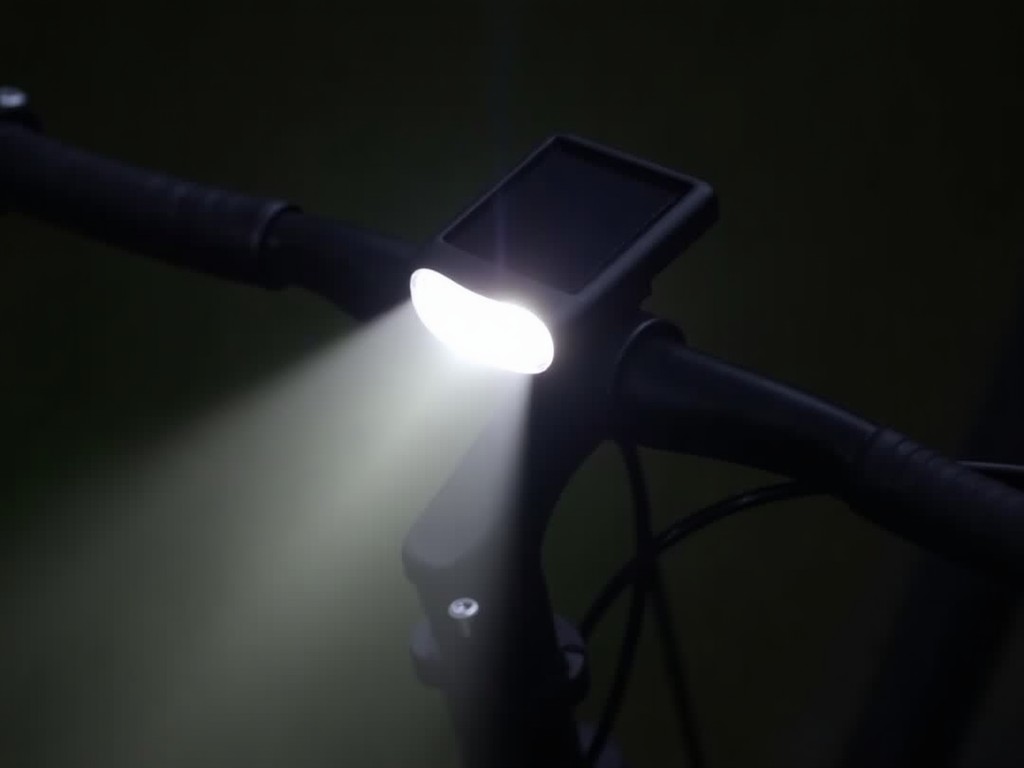
This device integrates a photovoltaic panel, rechargeable battery, LED driver, and optics into a single front‑mount unit for bicycles. It generates electrical energy from sunlight, stores it in an internal cell, and supplies regulated power to a high‑efficiency LED for illumination during low‑light conditions. The unit is offered as an ODM solution, allowing customers to specify electrical, mechanical, and optical parameters to match their bicycle platform.
Technical Specifications
| Parameter | Typical Value |
|---|---|
| Solar panel type | Monocrystalline silicon |
| Peak power (Pmax) | 0.5 W – 2 W (depending on panel area) |
| Battery chemistry | Lithium‑ion (LiCoO2 or LiFePO4) |
| Nominal capacity | 500 mAh – 2000 mAh |
| LED luminous flux | 30 lm – 150 lm |
| Color temperature | 5000 K – 6500 K (adjustable) |
| Beam angle (full width at half maximum) | 10° – 30° (optics interchangeable) |
| Ingress protection | IP65 (dust tight, protected against water jets) |
| Operating temperature range | ‑20 °C to +50 °C |
| Weight (approx.) | 45 g – 120 g |
| Overall dimensions (L×W×H) | 70 mm × 30 mm × 20 mm (variable with options) |
Solar Power System
The photovoltaic module uses monocrystalline silicon cells with a typical conversion efficiency of 18%–22%. Cells are laminated onto a flexible PCB that conforms to the housing curvature, allowing the panel to capture sunlight from a wide angle. A built‑in maximum power point tracking (MPPT) circuit extracts the available power and regulates the charge voltage to the lithium‑ion cell, preventing over‑charge and extending cycle life.
Optical Performance
Illumination is provided by a single high‑flux white LED mounted on a metal‑core PCB for effective heat dissipation. The LED emits a luminous flux ranging from 30 lm to 150 lm, selectable via binning or drive current. A secondary optic (either a total internal reflection lens or a reflector) shapes the beam to a full width at half maximum between 10° and 30°, delivering a focused spot for path illumination while limiting glare for on‑coming traffic. Color temperature is adjustable between 5000 K and 6500 K to suit different visual preferences.
Mechanical Design & Materials
The housing is fabricated from UV‑stabilized polycarbonate (PC) or, for higher mechanical strength, from an aluminum alloy with an anodized finish. Internal components are secured with ultrasonic welding or snap‑fit features, eliminating the need for screws that could loosen under vibration. A silicone gasket around the lens aperture provides the IP65 seal, while a strain‑relief boot protects the cable entry point. Mounting options include a stainless‑steel strap, a quick‑release bracket, or a customized flange that matches the fork crown or handlebar diameter.
Environmental Ratings
The unit passes IEC 60529 IP65 testing, confirming resistance to dust ingress and protection against water jets from any direction. Thermal cycling tests operate the device between ‑20 °C and +50 °C for 100 cycles without performance degradation. UV exposure follows ISO 4892‑2 methodology, showing less than 5% yellowing of the polycarbonate after 500 hours. Vibration resistance complies with IEC 60068‑2‑6, sinusoidal vibration 10‑500 Hz, 5 g RMS, ensuring reliability on rough terrain.
Customization (ODM) Options
As an ODM exporter, we tailor the design to customer specifications. Adjustable parameters include:
- Solar panel area (0.5 W to 2 W) and cell layout
- Battery capacity and chemistry (Li‑ion or LiFePO4)
- LED bin selection and drive current for desired flux
- Optic type (lens vs reflector) and beam angle
- Housing material (PC vs aluminum) and color (black, white, custom)
- Mounting interface (strap width, bracket geometry, flange dimensions)
- Cable length and connector type (JST, Molex, bare wires)
- Firmware functions such as steady‑on, flashing patterns, low‑battery indicator
Quality Assurance
Incoming inspection verifies solar panel open‑circuit voltage, battery internal resistance, and LED forward voltage using automated test equipment. In‑process checks monitor solder joint integrity, UV curing of encapsulants, and dimensional accuracy of machined features. Final functional testing measures luminous flux (integrating sphere), runtime under simulated sunlight, charge efficiency, and IP65 water‑spray resistance. Statistical process control charts track key parameters, and a sample from each production lot undergoes a 48‑hour accelerated aging test at 60 °C.
Packaging & Logistics
Each unit is placed in an anti‑static dissipative bag, then nestled in a custom‑cut EPS foam insert that protects the lens and cable. The insert sits inside a single‑wall corrugated carton with a 30 % recycled content label. Cartons are stacked on pallets, secured with stretch film, and marked with handling symbols (keep dry, this side up). For overseas shipments, a moisture‑barrier liner and desiccant packets are added to meet ISPM‑15 requirements. All packages carry a unique serial number and a QR code linking to the product data sheet.
Lead Times
Sample production, including tooling for any custom optics or brackets, typically requires 10‑15 business days after receipt of approved specifications and payment. Volume production lead time ranges from 20‑30 business days for order quantities up to 5,000 units, scaling linearly with lot size and subject to material availability (solar cells, battery cells). Expedited air freight can reduce transit time to 3‑5 days from the port of loading, while standard sea freight averages 18‑25 days to major destinations.
Frequently Asked Questions
- Can dimensions be customized? Yes, housing length, width, and mounting interface can be adjusted to fit specific bicycle frames or handlebar diameters.
- What information is required before quotation? We need the desired solar panel wattage, battery capacity, LED flux target, beam angle, housing material, mounting type, and any regulatory markings (e.g., CE, RoHS).
- What materials are available for the housing? UV‑stabilized polycarbonate and anodized aluminum alloy are standard; other polymers can be evaluated upon request.
- How is quality inspected? See the Quality Assurance section: incoming component checks, in‑process monitoring, and final functional tests including luminous flux, runtime, and IP65 verification.
- What packaging methods are available? Standard packaging uses anti‑static bag, EPS foam, and corrugated carton; alternative options such as blister packs or reusable cases can be quoted.
- How are export shipments protected? Each carton includes a moisture‑barrier liner and desiccant; pallets are stretch‑wrapped and labeled according to ISPM‑15 and IATA guidelines.
- What is the typical production lead time? Refer to the Lead Times section; sample lead time is 10‑15 days, volume production 20‑30 days depending on order size.
- How are samples arranged? After specification approval and sample fee, we ship 1‑3 units via express courier with tracking number.
Contact Us
To discuss your specific requirements or request a formal quotation, please reach out to our engineering team.
This device integrates a photovoltaic panel, rechargeable battery, LED driver, and optics into a single front‑mount unit for bicycles. It generates electrical energy from sunlight, stores it in an
Send Inquiry
If you are interested in our products, leave your information here and we will be in touch shortly.