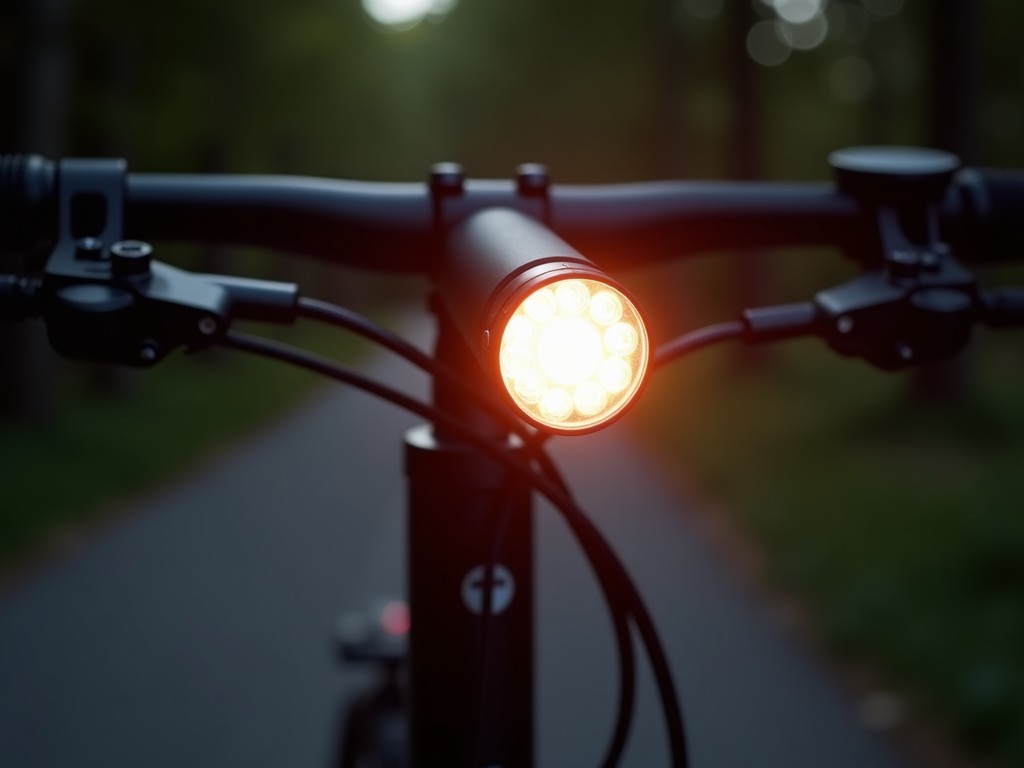
Professional Anti Glare Road Bicycle Front Light Distributor
Professional Anti Glare Road Bicycle Front Light Distributor
Anti-glare front lighting for road bicycles addresses the dual need of making the rider visible to others while minimizing stray light that can impair oncoming vehicle drivers. The optical system
- Categories:Bicycle Front Light
Professional Anti-Glare Road Bicycle Front Light Distributor
Anti-glare front lighting for road bicycles addresses the dual need of making the rider visible to others while minimizing stray light that can impair oncoming vehicle drivers. The optical system shapes the emitted beam to concentrate illumination on the road surface and immediate surroundings, directing light away from the eyes of approaching traffic.
Distributors of such lights must understand the photometric requirements defined by regional cycling standards (e.g., EN 15194, StVZO) and the thermal constraints imposed by compact housing designs. Supplying products that meet these criteria reduces the risk of non‑compliant returns and enhances end‑user safety.
Key Technical Specifications
| Parameter | Typical Value | Notes |
|---|---|---|
| Luminous Flux | 300–500 lm | Measured at maximum steady output |
| Beam Angle (Horizontal) | 10°–12° | Focused hotspot for distance visibility |
| Beam Angle (Vertical) | 4°–6° | Anti‑glare cutoff to protect on‑coming sightlines |
| Color Temperature | 5000K–5700K | Daylight‑like spectrum for contrast recognition |
| Ingress Protection | IP65 | Dust‑tight, resistant to low‑pressure water jets |
| Operating Temperature | ‑20 °C to +45 °C | Ensures reliable start‑up in cold climates |
| Power Consumption | 2.5 W–4.0 W | At nominal voltage 6 V DC |
| Battery Runtime (Li‑ion 2000 mAh) | 4–6 h | Dependent on selected mode |
| Housing Material | Machined AL‑6061 with anodized finish | Provides strength‑to‑weight ratio and corrosion resistance |
| Weight | 85 g–110 g | Includes mount bracket |
Optical Design and Anti‑Glare Technology
The light source is a high‑efficiency LED mounted on a metal‑core PCB to facilitate heat transfer. A precision‑molded polycarbonate lens incorporates a micro‑prismatic pattern that creates a sharp cutoff line, preventing upward scatter that would cause glare for drivers ahead.
Beam shaping is achieved through a combination of a reflective reflector cup and the lens geometry, resulting in a rectangular illumination pattern that aligns with the road lane width. This geometry ensures that the majority of emitted flux lands on the pavement where it improves obstacle detection for the rider.
Thermal Management and Housing
Heat generated by the LED is conducted through the metal‑core PCB to the aluminum housing, which acts as a passive heat sink. Fin‑like external ribs increase surface area without adding significant weight, keeping junction temperature below 85 °C under continuous operation at ambient 25 °C.
The housing is sealed with a silicone gasket and a UV‑stable polycarbonate cover, maintaining the IP65 rating even after prolonged exposure to rain and road spray. Anodizing the aluminum surface provides a hard coating that resists abrasion from chain‑ring contact.
Electrical and Power Characteristics
The driver circuit operates from a nominal 6 V DC supplied by a rechargeable Li‑ion pack or a dynamo‑regulated regulator. Constant current regulation maintains LED flux within ±5 % across the battery voltage range of 5.5 V to 7.2 V, ensuring consistent brightness throughout discharge.
Optional modes include steady, flashing, and pulse‑width‑modulated low‑power settings. Flashing frequencies comply with regional conspicuity standards (typically 1–2 Hz) while the low‑power mode extends runtime for extended touring.
Mounting and Installation Options
- Handlebar clamp compatible with Ø22.2 mm and Ø25.4 mm bar diameters, tool‑free quick‑release lever.
- Fork‑ crown mount adapter for suspension‑corrected forks, using stainless‑steel M5 bolts.
- Helmet‑mount bracket with adjustable tilt (±15°) and silicone padding to prevent slippage.
- Optional remote switch wiring harness for bar‑end actuation, 200 mm length, waterproof connector.
Applications in Road Cycling and Urban Commuting
Road cyclists require forward illumination that highlights surface irregularities, debris, and pavement markings without creating a glare hazard for motorists sharing the roadway. The anti‑glare cutoff satisfies the conspicuity requirements of many European traffic codes while delivering sufficient lux at 10 m distance to detect obstacles at speeds exceeding 35 km/h.
Urban commuters benefit from the flashing mode, which increases peripheral detection by drivers at intersections, and the low‑power setting that preserves battery life during multi‑leg trips. The lightweight construction ensures that adding the light does not noticeably affect bike handling or steering dynamics.
Quality Control and Testing
Each unit undergoes a photometric test in an integrating sphere to verify luminous flux and color temperature against the specified tolerances. A goniometer measures the vertical intensity distribution to confirm the anti‑glare cutoff angle remains within the 4°–6° window.
Thermal cycling tests expose the assembly to ‑20 °C to +45 °C cycles for 24 hours, followed by functional checks to ensure no drift in output or ingress protection failure. Vibration testing simulates road‑induced frequencies (5 Hz–500 Hz) to validate mechanical integrity of the mount and housing joints.
Customization Options
- Alternative LED colors (e.g., amber 590 nm) for specific regional regulations.
- Custom laser‑etched logos or part numbers on the housing surface.
- Adjustable beam width via interchangeable lens inserts (narrow 8° or wide 15° horizontal).
- Private‑label packaging with user manuals in multiple languages.
- Optional integrated USB‑C charging port with over‑charge protection.
Frequently Asked Questions
Can dimensions be customized? Yes, the housing length and mounting interface can be adjusted according to specific handlebar diameters or frame geometry; detailed drawings are required for quotation.
What information is required before quotation? Required data include target luminous flux, preferred operating voltage, mounting type, any regulatory standards to be met, and anticipated order volume.
What materials are available for the housing? Standard is anodized AL‑6061; alternatives such as stainless steel or reinforced polymer composites are available upon request.
How is quality inspected? Each batch receives 100 % photometric and thermal cycling verification, with a sample subjected to IP65 water‑jet testing and vibration analysis.
What packaging methods are available? Options include individual anti‑static bags, bulk‑packed recyclable cartons, and custom‑foam inserts for retail presentation.
How are export shipments protected? Goods are palletized, stretch‑wrapped, and placed in ISPM‑15 compliant wooden crates with corner protectors to withstand long‑haul transport.
What is the typical production lead time? Lead time ranges from 3 to 6 weeks depending on order size and customization complexity; exact timing is confirmed after receipt of technical specifications.
How are samples arranged? Sample units can be dispatched via express coupons after approval of a sample request form and receipt of a proforma invoice.
Anti-glare front lighting for road bicycles addresses the dual need of making the rider visible to others while minimizing stray light that can impair oncoming vehicle drivers. The optical system
Send Inquiry
If you are interested in our products, leave your information here and we will be in touch shortly.