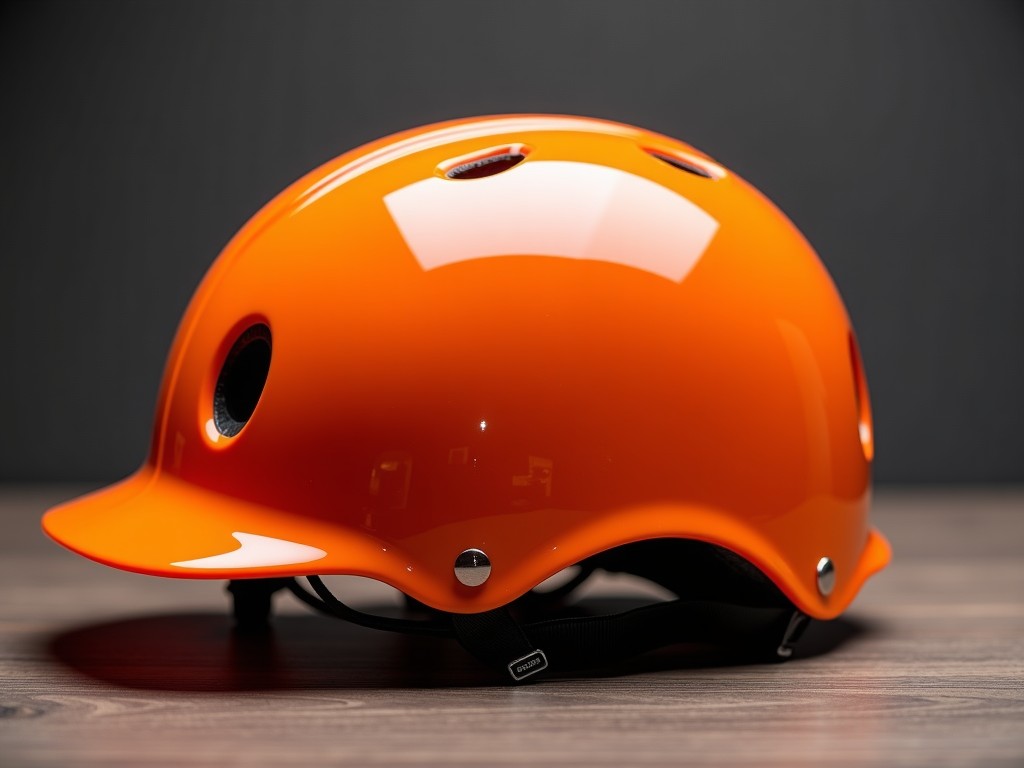
Bulk Reflective Commuter Bicycle Safety Helmet Exporter
Bulk Reflective Commuter Bicycle Safety Helmet Exporter
This helmet is designed for high‑volume supply to commuter‑focused bicycle retailers and fleet operators. The core function is to provide impact protection while integrating a reflective surface that
- Categories:Bicycle Safety Helmet
Bulk Reflective Commuter Bicycle Safety Helmet
This helmet is designed for high‑volume supply to commuter‑focused bicycle retailers and fleet operators. The core function is to provide impact protection while integrating a reflective surface that enhances visibility in low‑light urban environments.
Technical Specifications
| Parameter | Typical Value | Notes |
|---|---|---|
| Shell Material | Injection‑molded ABS | Impact resistance per EN 1078 |
| Liner | Expanded polystyrene (EPS), density 20‑25 kg/m³ | Energy absorption tested to 250 J |
| Reflective Layer | Microprismatic film, 300 cd/lx/m² retro‑reflectivity | Meets EN 13356 Class 2 |
| Size Range | S (50‑54 cm), M (54‑58 cm), L (58‑62 cm) | Adjustable retention system |
| Weight | ≈ 280 g (size M) | Balanced for comfort |
Materials & Construction
The outer shell uses ABS polymer chosen for its stiffness‑to‑weight ratio and ability to retain fine surface detail for the reflective film. The EPS liner is molded in two densities to manage progressive crush forces, reducing peak acceleration during an impact.
- Shell thickness: 2.0 mm nominal, uniform across impact zones.
- Ventilation channels: 6 frontal, 4 rear, each 8 mm×12 mm cross‑section.
- Retention system: nylon webbing with micrometric buckle, adjustable 20 mm range.
Reflective Technology
A microprismatic reflective film is laminated to the helmet’s exterior using a pressure‑sensitive adhesive that maintains flexibility below –20 °C. The film returns light entering at angles up to 45° with a coefficient of retro‑reflection exceeding 300 cd/lx/m², which improves detection distance for motorists by approximately 30 % compared with non‑reflective helmets under identical illumination.
Compliance & Standards
The helmet is manufactured to satisfy EN 1078:2012+A1:2012 for pedal cyclists and EN 13356:2001 for reflective devices. Each batch receives a conformity assessment that includes impact attenuation testing, retention system strength, and field of view verification.
Customization Options
- Logo pad printing or silk‑screen on the rear shell (up to 2 colors).
- Alternative reflective films: high‑intensity prismatic or glass‑bead types.
- Ventilation plug kits for climate‑specific models.
- Custom sizing intervals (e.g., XL 62‑66 cm) available upon request.
Quality Control
Production follows a statistical process control plan. Critical dimensions (shell thickness, liner density) are measured on every 50th part using calibrated micrometers and density gauges. Reflective film adhesion is tested via peel‑strength according to ASTM D903, with a minimum acceptable value of 1.5 N/mm.
Applications
- Urban commuter fleets requiring enhanced night‑time visibility.
- Bike‑share programs seeking standardized safety gear.
- Corporate wellness programs that supply employees with reflective helmets.
- Retail distributors ordering in pallet‑quantities for seasonal campaigns.
Packaging & Shipping
Helmets are packed in single‑wall corrugated cartons, 20 units per carton, with interleaving polyethylene foam sheets to prevent surface abrasion. Cartons are palletized (1.2 m × 1.0 m footprint) and stretch‑wrapped for export. Standard lead time is 30‑35 days after receipt of purchase order, subject to material availability.
Frequently Asked Questions
Q: Can the reflective film be customized with a specific corporate color?
A: Yes. The film can be over‑printed with translucent inks to match brand hues while preserving retro‑reflective performance.
Q: What information is required before a quotation?
A: Desired size distribution, logo artwork (vector preferred), quantity, and delivery destination.
Q: How are export shipments protected against moisture?
A: Cartons include a desiccant pouch and are sealed with water‑resistant tape; pallets are covered with a polyethylene hood.
Contact for Inquiry
To request a formal quotation or discuss technical details, please contact our export team.
This helmet is designed for high‑volume supply to commuter‑focused bicycle retailers and fleet operators. The core function is to provide impact protection while integrating a reflective surface that
Send Inquiry
If you are interested in our products, leave your information here and we will be in touch shortly.