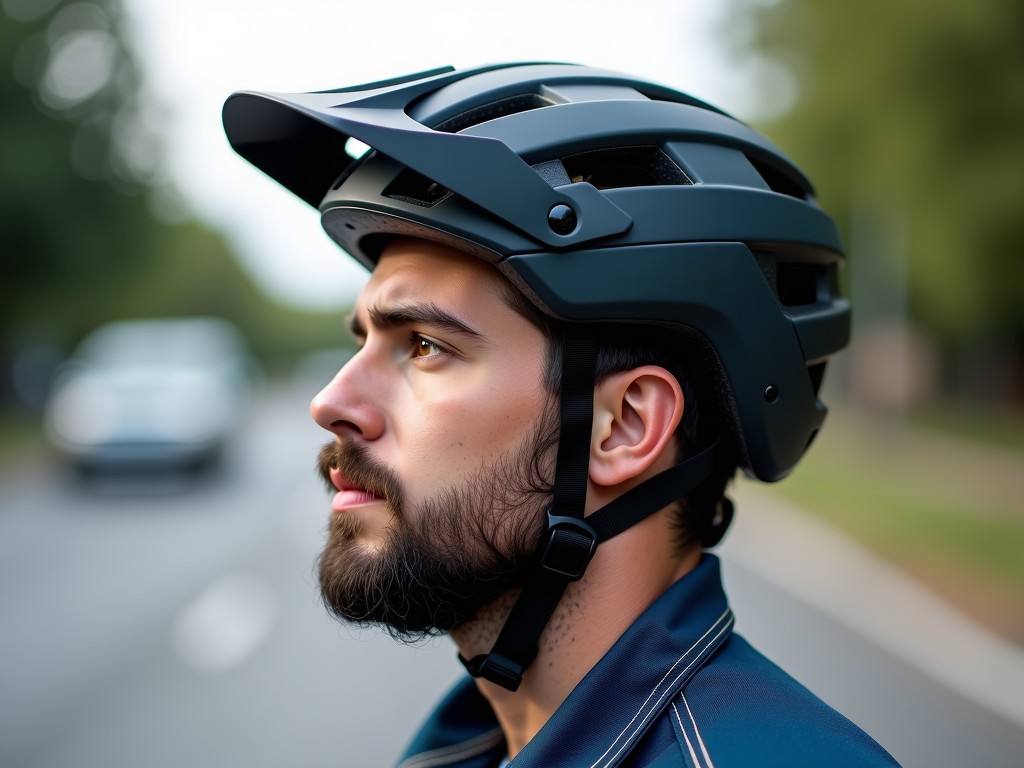
Custom Logo Urban Skateboard Bicycle Safety Helmet Vendor
Custom Logo Urban Skateboard Bicycle Safety Helmet Vendor
Urban commuters who skateboard or ride bicycles face similar head‑impact risks from falls, collisions with curbs, or interactions with traffic. Effective protection depends on a helmet’s ability to
- Categories:Bicycle Safety Helmet
Custom Logo Urban Skateboard Bicycle Safety Helmet Vendor
Urban commuters who skateboard or ride bicycles face similar head‑impact risks from falls, collisions with curbs, or interactions with traffic. Effective protection depends on a helmet’s ability to manage kinetic energy, distribute load, and stay securely positioned during sudden movements.
Impact Performance Standards
The helmets are tested to meet ASTM F1447 (skateboard) and EN 1078 (bicycle) criteria, which specify a peak acceleration limit of 300 g and a duration‑dependent energy absorption threshold. These benchmarks ensure that, under standardized drop‑test conditions, the helmet reduces transmitted force to levels associated with low risk of skull fracture.
Weight and Ventilation Characteristics
A typical medium‑size shell weighs between 320 g and 380 g, depending on the chosen material lay‑up. Ventilation is provided by 12 to 18 engineered apertures, each shaped to promote laminar airflow while maintaining structural integrity around the perimeter.
Material Options
- Expanded polystyrene (EPS) core with density range 20‑25 kg/m³ for standard impact absorption.
- Expanded polypropylene (EPP) core, density 30‑35 kg/m³, offering multi‑impact capability and higher recovery after deformation.
- Hybrid shell combining ABS outer layer with polycarbonate overlay for increased scratch resistance and UV stability.
Customization Workflow
The process begins with receipt of a vector logo file (AI, EPS, or SVG) and confirmation of placement area (front, rear, or side). A digital mock‑up is generated to verify contrast and clearance relative to ventilation channels and retention system.
- Logo is applied via water‑based screen printing or heat‑transfer vinyl, selected based on substrate temperature tolerance.
- Each printed sample undergoes a 72‑hour ambient cure before proceeding to impact testing to ensure adhesion does not compromise energy‑absorbing performance.
- Final inspection includes dimensional check (±1 mm), adhesion tape test (ASTM D3330), and visual defect assessment under 500 lux illumination.
Typical Urban Mobility Applications
In dense city environments, skateboarders frequently encounter abrupt stops caused by uneven pavement or unexpected obstacles, generating rotational forces that a well‑fitted helmet mitigates through its internal retention system. Bicycle commuters benefit from the same protection when navigating shared lanes, where low‑speed side impacts are prevalent.
Quality Assurance Procedures
Each production lot undergoes random sampling for impact testing per the relevant standard, with a minimum of three specimens per size. Additionally, retention‑strap strength is measured using a tensile tester, requiring a minimum breaking force of 225 N to prevent accidental release during a crash.
Specification Table
| Parameter | Typical Value | Notes / Customizable |
|---|---|---|
| Shell Material | ABS / PC blend | Alternative: fiberglass reinforced polymer |
| Core Material | EPS (20‑25 kg/m³) or EPP (30‑35 kg/m³) | Selected per impact‑multiplicity requirement |
| Weight (Medium) | 320‑380 g | Varies with core and shell thickness |
| Ventilation Apertures | 12‑18 | Pattern adjustable for airflow vs. coverage |
| Impact Standard | ASTM F1447 / EN 1078 | Certification available upon request |
| Logo Application Method | Screen printing or heat‑transfer vinyl | Based on logo complexity and color count |
| Retention Strap Breaking Force | ≥225 N | Tested per EN 1078 clause 5.2 |
Frequently Asked Questions
Can the helmet size be adjusted?
Yes, the retention system incorporates a dial‑adjustable cradle allowing a fit range of 52 cm to 58 cm head circumference.
What file formats are acceptable for the logo?
Vector formats (AI, EPS, SVG) are preferred; high‑resolution raster files (≥300 dpi) may be accepted with potential additional setup fees.
Is there a minimum order quantity for custom logos?
Typically, the minimum run is 50 units; lower quantities can be accommodated as a sample program with adjusted pricing.
How are samples validated before full production?
A pre‑production sample undergoes the same impact and adhesion tests as production units; approval is based on meeting all specification thresholds.
Request a Quote
To discuss material selection, logo placement, or certification needs, provide your project details and we will prepare a formal quotation.
Contact UsUrban commuters who skateboard or ride bicycles face similar head‑impact risks from falls, collisions with curbs, or interactions with traffic. Effective protection depends on a helmet’s ability to
Send Inquiry
If you are interested in our products, leave your information here and we will be in touch shortly.