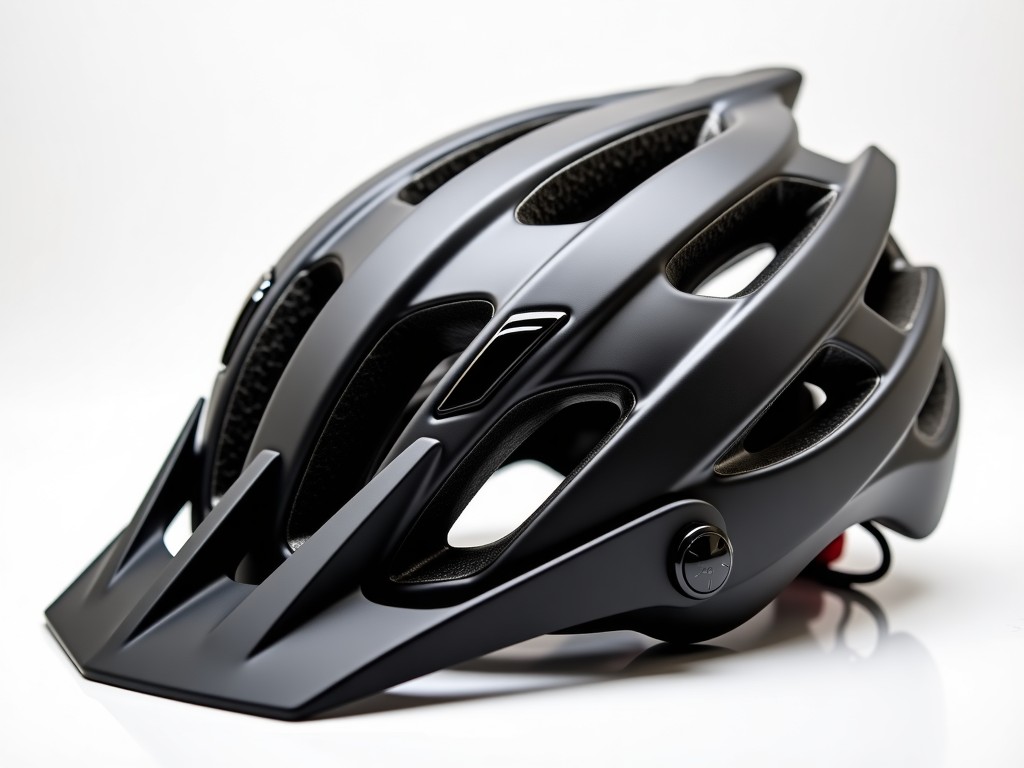
Custom Ultralight Road Bicycle Safety Helmet Manufacturer
Custom Ultralight Road Bicycle Safety Helmet Manufacturer
A custom ultralight road bicycle safety helmet is engineered to satisfy EN 1078 impact thresholds while minimizing mass to reduce rider fatigue during prolonged efforts. The design pairs a
- Categories:Bicycle Safety Helmet
Custom Ultralight Road Bicycle Safety Helmet Manufacturer
Overview
A custom ultralight road bicycle safety helmet is engineered to satisfy EN 1078 impact thresholds while minimizing mass to reduce rider fatigue during prolonged efforts. The design pairs a low‑density EPS liner with a thin‑walled polycarbonate shell and a retention system that distributes loads across the occipital region.
Technical Specifications
| Parameter | Typical Value | Adjustable Range |
|---|---|---|
| Shell material | Polycarbonate | ABS or carbon‑fiber reinforced polymer available on request |
| Liner density | 20 kg/m³ EPS | 15–25 kg/m³ depending on impact class |
| Weight (size M) | 180 g | 150–210 g with optional ventilation inserts |
| Ventilation openings | 22 total, frontal area 12 cm² | Customizable pattern and size |
| Retention system | Micro‑adjustable ratchet with silicone padding | Replaceable straps, magnetic buckle option |
Material Options
- Polycarbonate shell – impact resistance > 80 J, thickness 0.8 mm
- ABS shell – lower cost, thickness 1.0 mm, suitable for promotional batches
- Carbon‑fiber reinforced polymer shell – weight reduction up to 30 % vs polycarbonate, tensile strength > 400 MPa
- EPS liner – density selectable from 15 to 25 kg/m³, cell size 0.5 mm
- Retention straps – nylon webbing with optional silicone coating for sweat management
Customization Process
The manufacturer accepts CAD files or detailed sketches for shell geometry, ventilation layout, and graphic artwork. After receipt, a finite‑element impact simulation is run to verify that the proposed geometry maintains the required peak acceleration below 300 g. Upon approval, a prototype is produced using CNC‑milled molds and hand‑laid EPS, followed by impact testing on a drop‑tower rig according to EN 1078.
Lead time for the first article is typically 4–5 weeks; production tooling adds 2–3 weeks. Subsequent orders benefit from reduced setup time, with lot sizes as low as 50 units achievable without compromising traceability.
Applications in Competitive Road Cycling
In road racing, aerodynamic drag and thermal load directly influence performance. A helmet that combines a low frontal area with strategically placed vents reduces drag coefficient by approximately 0.02 compared with a standard road helmet, while maintaining core temperature rise under 2 °C during a 90‑minute effort at 25 °C ambient.
For endurance events such as gran fondos, the reduced mass lowers neck muscle fatigue, which can improve handling stability in the final kilometers. Teams often specify a weight target below 190 g for size M to meet UCI equipment regulations while retaining sufficient impact margin.
Quality Control Philosophy
Each batch undergoes incoming material verification: shell thickness measured with micrometer (±0.02 mm), EPS density checked via gravimetric method, and strap tensile strength validated at 1500 N. In‑process controls include visual inspection of mold surfaces and dimensional checks of vent openings using a coordinate measuring machine.
Finished helmets are subjected to a random sample impact test (typically 1 % of lot) on a calibrated drop tower. Results are recorded and compared against the acceptance criterion of peak linear acceleration ≤ 300 g. Documentation, including test charts and material certificates, is retained for a minimum of five years.
Frequently Asked Questions
- Can dimensions be customized? Yes, internal circumference and shell length can be adjusted in 2 mm increments based on rider head measurements.
- What information is required before quotation? Required inputs include desired shell material, target weight, ventilation pattern, artwork files (vector preferred), and order quantity.
- What materials are available? Polycarbonate, ABS, carbon‑fiber reinforced polymer shells; EPS liners with densities from 15 to 25 kg/m³; nylon or silicone‑coated retention straps.
- How is quality inspected? Incoming material checks, in‑process dimensional verification, and final impact sampling per EN 1078.
- What packaging methods are available? Individual helmets packed in recycled cardboard boxes with foam inserts; bulk packs of 10 units in corrugated cartons with corner protection.
- How are export shipments protected? Palletized with stretch film, edge boards, and humidity‑indicating desiccant packs; compliance with ISPM 15 for wooden pallets.
- What is the typical production lead time? First article 4–5 weeks; repeat orders 2–3 weeks after tooling is ready.
- How are samples arranged? Samples are produced after design approval and shipped via express courier; costs are credited against the first production order.
Request a Technical Quotation
To begin a custom helmet project, provide your performance targets, material preferences, and artwork specifications. Our engineering team will review the inputs, run a preliminary impact simulation, and return a detailed quotation including tooling costs, unit price, and lead time.
Submit your inquiry to start the conversation.
A custom ultralight road bicycle safety helmet is engineered to satisfy EN 1078 impact thresholds while minimizing mass to reduce rider fatigue during prolonged efforts. The design pairs a
Send Inquiry
If you are interested in our products, leave your information here and we will be in touch shortly.