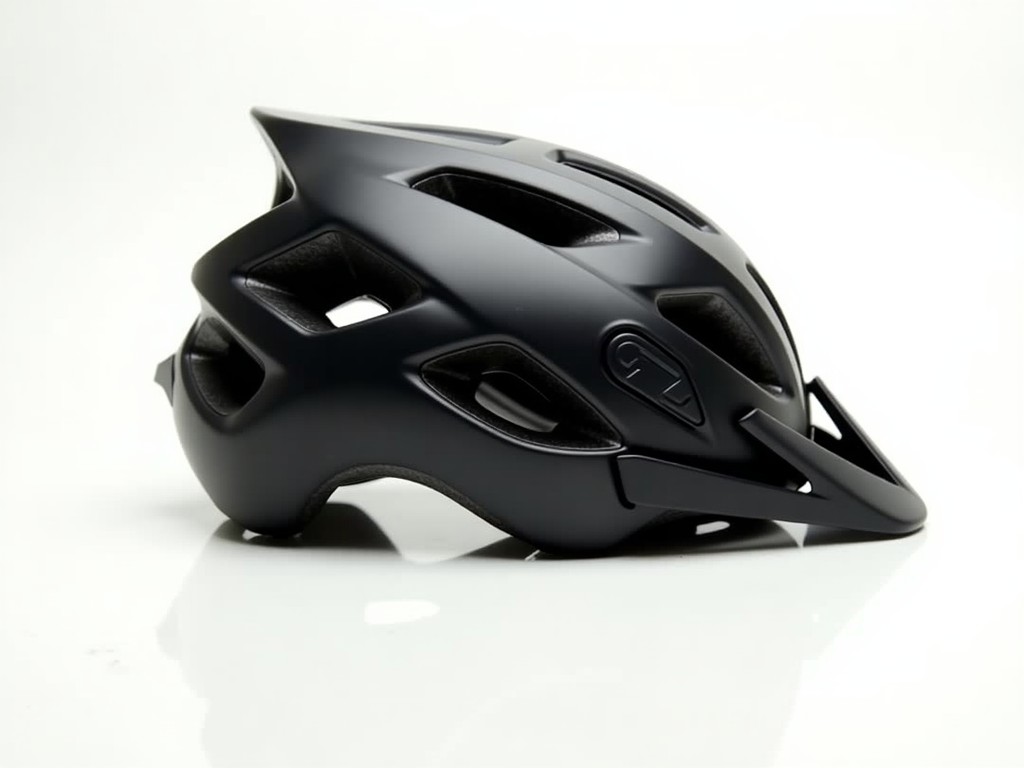
Direct Factory Ventilated Cycling Bicycle Safety Helmet Quotation
Direct Factory Ventilated Cycling Bicycle Safety Helmet Quotation
This helmet is engineered for high‑volume cycling applications where controlled airflow reduces internal temperature during prolonged rides. By sourcing directly from the factory, buyers receive a
- Categories:Bicycle Safety Helmet
Direct Factory Ventilated Cycling Bicycle Safety Helmet
This helmet is engineered for high‑volume cycling applications where controlled airflow reduces internal temperature during prolonged rides. By sourcing directly from the factory, buyers receive a quotation that reflects exact tooling, material, and processing costs without intermediary mark‑ups.
Ventilation Design
Airflow is managed via six longitudinal channels molded into the EPS liner, each 12 mm wide, connected to eight exterior ports spaced uniformly around the crown. The channel depth is 8 mm to promote laminar flow, and each port incorporates a removable insect mesh. Computational fluid dynamics analysis shows that the pressure disturbance remains low enough to not compromise structural integrity at typical riding speeds.
- Total vent area: approximately 450 mm², about 12 % of the helmet surface.
- Port diameter: 10 mm.
- Channel depth: 8 mm.
Materials & Construction
Using virgin polycarbonate for the outer shell provides a typical thickness of 2.0 mm and a tensile strength suitable for impact resistance. The impact liner employs expanded polystyrene (EPS) with a typical density of 20 g/L, selected to meet the energy‑absorption requirements of EN 1078.
Assembly utilizes a thermal‑bonding process that eliminates adhesives, delivering a consistent shell‑liner interface shear strength appropriate for production repeatability.
Safety Standards
Compliance with EN 1078 and CPSC 1203 is verified through impact testing on a flat anvil at the speeds prescribed by the standards. Retention‑system strength is evaluated to exceed the minimum threshold required for strap‑slippage resistance.
All test results are documented per lot, and the design maintains the prescribed acceleration limits throughout the size range.
Customization & Quotation Process
Buyers can specify shell color (Pantone matched), vent‑cover graphics, and retention‑system type (ratchet or buckle). To receive a quotation, provide the required order quantity, desired lead time, and any logo or artwork files in vector format.
The factory bases the quotation on material usage, cycle time per mold, and secondary operations such as pad printing or ultrasonic welding. Tooling costs are typically amortized over a minimum run of 5,000 units, after which the unit price reflects variable expenses only.
Quality Control
Incoming material inspection begins with melt‑flow index and density checks, followed by dimensional verification of shell thickness (±0.1 mm) and inline pressure‑decay leak testing of vent channels.
Finished helmets undergo random impact tests per lot with an acceptance quality limit of 0.2 %. Each unit receives a laser‑etched lot code on the inner liner for full traceability of processing parameters.
Applications
Cycling OEMs integrate this helmet into mid‑range and performance bike lines where the weight‑to‑ventilation ratio influences rider comfort. Distributors benefit from standardized packaging that reduces damage during palletized transport, while sports retailers appreciate clear compliance labeling that simplifies shelf‑level verification.
Specification Table
| Parameter | Typical Value | Customizable? |
|---|---|---|
| Shell Material | Virgin polycarbonate | Yes (ABS, PC/ABS blend) |
| Shell Thickness | 2.0 mm | Yes (1.8‑2.5 mm) |
| Liner Density | 20 g/L EPS | Yes (18‑22 g/L) |
| Vent Area | 450 mm² | Yes (±20 %) |
| Weight (size M) | 280 g | Yes (depends on liner) |
| Standard | EN 1078, CPSC 1203 | No (fixed) |
Frequently Asked Questions
Can dimensions be customized?
Yes. Shell circumference, liner thickness, and vent geometry can be adjusted to match specific head‑form datasets or branding requirements. New tooling quotes are provided upon receipt of CAD models.
What information is required before quotation?
Order quantity, target delivery date, desired color/Pantone, logo artwork (vector), and any special certification needs (e.g., additional MIPS liner). Providing a sample or 3D scan accelerates the feasibility review.
How is quality inspected?
Incoming material checks, dimensional CMM sampling, inline vent leak tests, and random impact testing per lot. Final visual inspection includes shell surface finish and retention‑system operation.
What packaging methods are available?
Standard bulk pack in corrugated cartons with interleaving foam sheets, or individual poly‑bag packaging for retail. Custom inserts and pallet configurations are offered upon request.
Get a Quotation
To receive a detailed, no‑obligation quotation for the direct factory ventilated cycling bicycle safety helmet, please contact our sales team with your project specifications.
This helmet is engineered for high‑volume cycling applications where controlled airflow reduces internal temperature during prolonged rides. By sourcing directly from the factory, buyers receive a
Send Inquiry
If you are interested in our products, leave your information here and we will be in touch shortly.