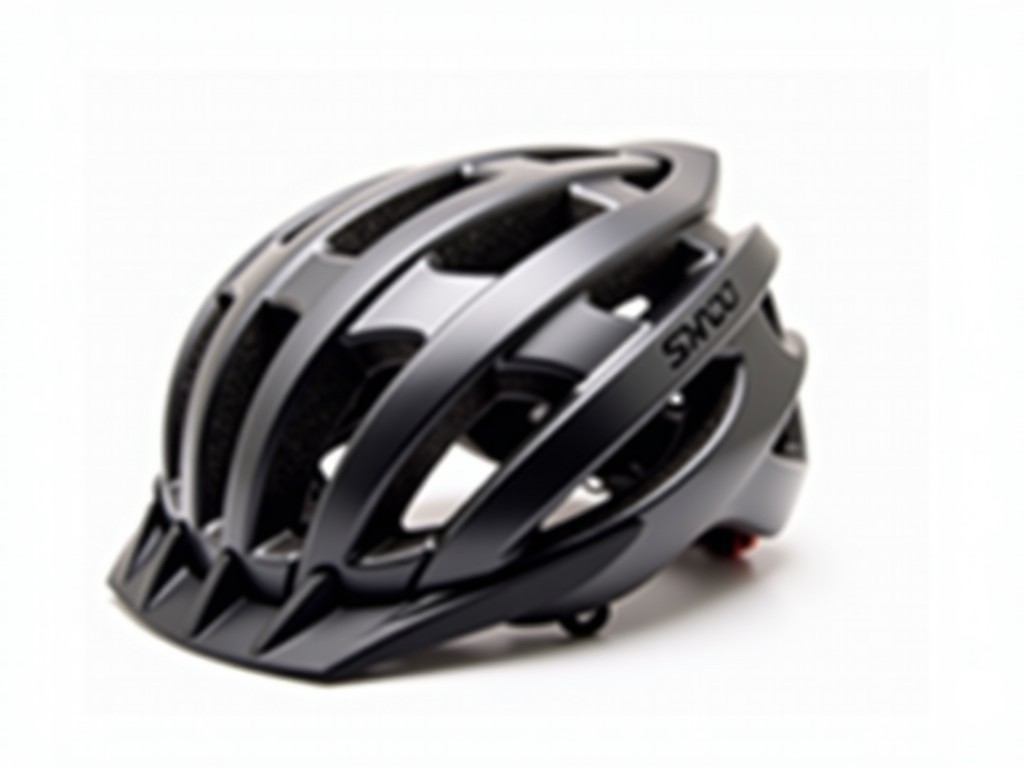
Factory Price Detachable Visor Bicycle Safety Helmet Supplier
Factory Price Detachable Visor Bicycle Safety Helmet Supplier
This helmet combines a rigid outer shell with an energy‑absorbing EPS liner and a detachable polycarbonate visor. The design targets urban commuters and recreational riders who require eye protection
- Categories:Bicycle Safety Helmet
Factory Price Detachable Visor Bicycle Safety Helmet
Overview
This helmet combines a rigid outer shell with an energy‑absorbing EPS liner and a detachable polycarbonate visor. The design targets urban commuters and recreational riders who require eye protection without sacrificing ventilation or weight efficiency.
Core Design Parameters
- Shell thickness: 2.0 mm ± 0.1 mm (ABS or polycarbonate)
- EPS liner density: 45 kg/m³ ± 5 kg/m³
- Visor thickness: 1.8 mm ± 0.1 mm polycarbonate with anti‑fog coating
- Quick‑release latch torque: 0.45 Nm ± 0.05 Nm for secure attachment
- Ventilation: 12 frontal ports, each 8 mm diameter, plus 4 rear exhaust ports
Materials and Construction
| Component | Typical Material | Key Property |
|---|---|---|
| Outer shell | ABS (Acrylonitrile‑Butadiene‑Styrene) or PC (Polycarbonate) | Impact resistance ≥ 30 J (Charpy) |
| Impact liner | Expanded polystyrene (EPS) | Compressive strength 0.8 MPa ± 0.1 MPa |
| Visor | Polycarbonate with UV‑stable anti‑fog layer | Light transmission 85 % ± 2 %; fog delay > 30 s at 25 °C, 80 % RH |
| Retention system | Nylon webbing with polyacetal buckle | Tensile strength ≥ 2 kN |
Visor Detachment Mechanism
The visor attaches via two symmetrical latch points located at the temple areas. Each latch incorporates a spring‑loaded plunger that engages a recessed detent on the visor flange. Disengagement requires a downward press of 12 N ± 2 N on the latch release tab, after which the visor pivots upward and separates. The mechanism is rated for 5000 cycles without loss of retention force.
Performance Characteristics
| Test | Standard | Result (Typical) |
|---|---|---|
| Impact absorption (frontal) | EN 1078:2012+A1:2012 | Peak acceleration ≤ 250 g |
| Penetration resistance | EN 1078 | No penetration at 3 J impact energy |
| Retention system strength | EN 1078 | Load to failure ≥ 2.3 kN |
| Visor optical clarity | ANSI Z87.1‑2020 | Haze ≤ 2 %; luminous transmittance ≥ 85 % |
Typical Applications
- Urban commuting where glare and rain protection improve rider safety
- Leisure road cycling on sunny days; visor reduces UV exposure and eye fatigue
- Shared‑fleet bicycles in city‑wide rental programs; detachable visor allows quick cleaning between users
- Cycling events with variable light conditions; riders can stow the visor in a pocket when not needed
Quality Assurance Process
Each production lot undergoes incoming material verification: shell polymer melt flow index, EPS bead expansion ratio, and visor coating thickness are measured against specification limits. During assembly, torque on the latch fasteners is checked with a calibrated driver, and a random sample of 1 % is subjected to a full impact test per EN 1078. Final inspection includes dimensional checks of the visor seating gap (0.5 mm ± 0.2 mm) and functional verification of the release mechanism.
Customization Options
- Shell color: solid Pantone matches or two‑tone combos (minimum order 500 pcs)
- Ventilation port pattern: adjustable number and diameter to suit climate requirements
- Visor tint: clear, light smoke (15 % VLT), medium smoke (30 % VLT), or mirrored finish
- Retention system: optional magnetic buckle or adjustable cam lock
- Branding: pad‑printed logo on the side vents or embroidered strap label
Frequently Asked Questions
- Can the visor be replaced if scratched? Yes, the visor is a separate polycarbonate piece with a standard mounting interface; replacement units are supplied with the same anti‑fog coating.
- What information is required for a quotation? Please provide order quantity, desired shell material (ABS or PC), visor tint, any custom color or branding details, and preferred packaging (bulk carton or individual poly‑bag).
- Are there any certification documents available? The helmet design complies with EN 1078; test reports and CE conformity declarations can be furnished upon request.
- What is the typical lead time for a 2000‑piece order? Production normally completes within 25 working days after receipt of approved artwork and material confirmation, assuming standard material availability.
- How are shipments protected against damage? Helmets are packed in layered corrugated cartons with interleaved foam sheets; each carton undergoes a drop test from 0.8 m on all faces before sealing.
Contact for Inquiry
To discuss pricing, lead times, or technical specifics, please reach out via the contact form or email. Our engineering team will respond with a detailed quotation and any requested documentation.
Submit InquiryThis helmet combines a rigid outer shell with an energy‑absorbing EPS liner and a detachable polycarbonate visor. The design targets urban commuters and recreational riders who require eye protection
Send Inquiry
If you are interested in our products, leave your information here and we will be in touch shortly.