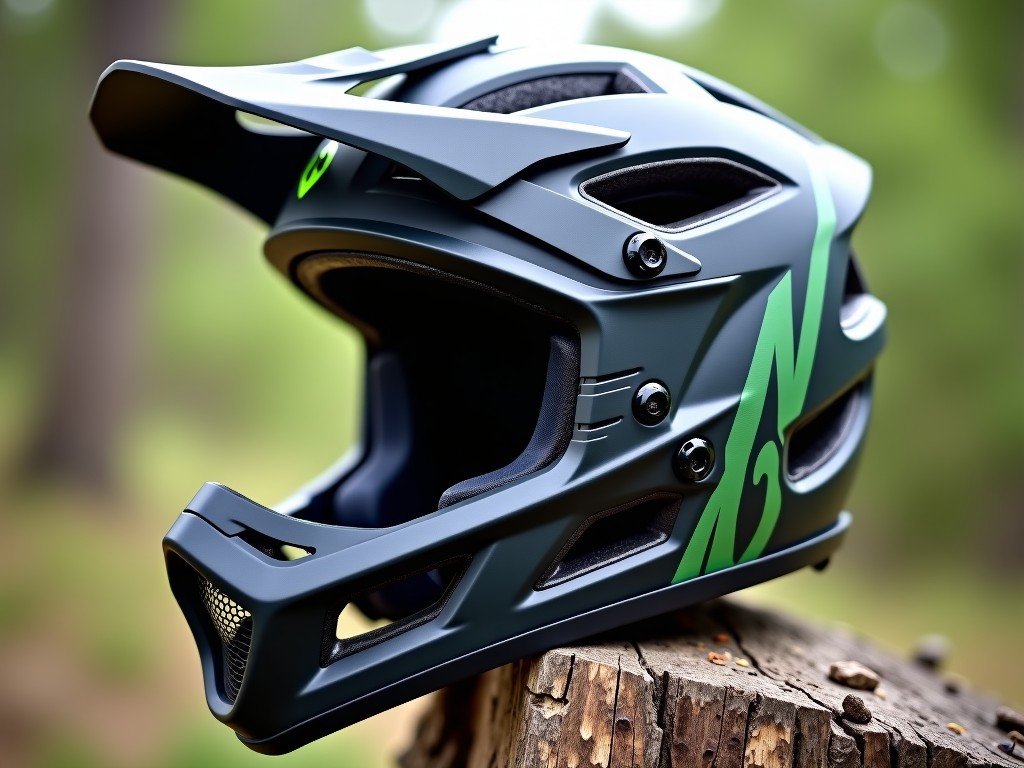
Professional Full Face Downhill Bicycle Safety Helmet Distributor
Professional Full Face Downhill Bicycle Safety Helmet Distributor
A full‑face helmet for downhill mountain biking must protect the cranium, jaw, and facial area while remaining lightweight enough for aggressive maneuvering. The design balances impact absorption,
- Categories:Bicycle Safety Helmet
Professional Full Face Downhill Bicycle Safety Helmet – Distributor Overview
A full‑face helmet for downhill mountain biking must protect the cranium, jaw, and facial area while remaining lightweight enough for aggressive maneuvering. The design balances impact absorption, ventilation, and field of view to meet the demands of high‑speed descents on technical terrain. Distributors seeking a reliable product need to understand the engineering trade‑offs that influence rider safety and comfort.
Design and Construction
The helmet employs a multi‑layer EPS liner graded by density to manage both low‑speed impacts and high‑energy crashes. An outer shell of injection‑molded polycarbonate provides abrasion resistance and distributes load over a larger area. Internal reinforcement ribs are molded into the EPS to prevent liner compression under localized loads.
Ventilation is achieved through a network of front intake ports and rear exhaust channels that create a pressure‑driven airflow path. The chin bar integrates a removable, washable liner made from antimicrobial-treated fabric to maintain hygiene during extended use.
Retention is handled by a double‑D ring system with a micro‑adjustable strap, allowing precise tensioning without pressure points. The visor is adjustable, shatter‑resistant polycarbonate, and can be tilted to block glare or debris while maintaining peripheral vision.
Material Specifications
- Outer shell: Polycarbonate, 2.0 mm nominal thickness, impact‑tested to ≥ 150 J.
- Impact liner: Expanded polystyrene (EPS), density gradient 25‑45 kg/m³, molded in‑place.
- Chin bar liner: Polyester fabric with silver‑ion antimicrobial treatment, 200 g/m² weight.
- Retention strap: Nylon webbing, 25 mm width, tensile strength ≥ 2 kN.
- Visor: Polycarbonate, 1.5 mm thickness, UV‑stabilized, scratch‑resistant coating.
Safety Standards and Test Performance
| Standard | Test Method | Typical Requirement |
|---|---|---|
| ASTM F1952 | Downhill mountain bike helmet impact | Peak acceleration ≤ 300 g |
| EN 1078 | Pedal and skate helmet | Impact energy ≤ 250 J |
| CPSC 1203 | Bicycle helmet | Peak acceleration ≤ 300 g |
| Snell B‑95 | Helmet impact | Peak acceleration ≤ 275 g |
Values above represent typical test results for production helmets; actual performance may vary with size and specific configuration.
Applications in Downhill Mountain Biking
Downhill courses feature steep gradients, rocky sections, and frequent tree impacts, creating a high probability of facial and cranial trauma. A full‑face design shields the mandible, nose, and cheekbones, reducing the likelihood of fractures that are common in open‑head impacts.
The helmet’s aerodynamic profile minimizes drag at speeds exceeding 50 km/h, while the ventilation system prevents overheating during prolonged efforts. Riders benefit from an unobstructed downward view, essential for navigating tight switchbacks and drops.
Because the helmet meets multiple international standards, it is suitable for use in sanctioned downhill races, bike park sessions, and backcountry freeride where regulations may require certified head protection.
Customization Options
- Shell color: Matte black, gloss white, team‑specific hues (custom Pantone matching available).
- Visor tint: Clear, smoke, amber, or mirrored finishes.
- Liner thickness: Standard 25 mm or reduced 20 mm for lighter weight profiles.
- Retention system: Double‑D ring or quick‑release buckle with adjustable cam.
- Branding: Laser‑etched logo, silk‑screened graphics, or removable decal panels.
Quality Control Philosophy
Each helmet undergoes dimensional inspection of shell thickness, liner density distribution, and retention strap elongation before leaving the line. Random samples are subjected to impact testing per ASTM F1952 to verify that production batches remain within the prescribed acceleration limits.
Visual inspections check for surface defects, vent blockage, and proper alignment of the visor mechanism. Documentation of test results is retained for traceability, allowing distributors to request certification copies for specific lot numbers.
Frequently Asked Questions
| Question | Answer |
|---|---|
| Can the helmet size be adjusted? | Yes, the retention strap offers micro‑adjustment and the interior includes removable comfort pads to fine‑tune fit. |
| What materials are available for the outer shell? | Standard polycarbonate is offered; optional ABS or composite blends can be quoted upon request. |
| Is the visor replaceable? | The visor attaches via a snap‑in system and can be swapped for different tints without tools. |
| How are export shipments protected? | Helmets are packed in corrugated cartons with internal foam separators and humidity‑absorbing packets to prevent deformation during transit. |
| What is the typical lead time for a customized order? | Lead times range from 4 to 6 weeks depending on color, branding, and order volume; exact schedules are confirmed after quotation. |
A full‑face helmet for downhill mountain biking must protect the cranium, jaw, and facial area while remaining lightweight enough for aggressive maneuvering. The design balances impact absorption,
Send Inquiry
If you are interested in our products, leave your information here and we will be in touch shortly.