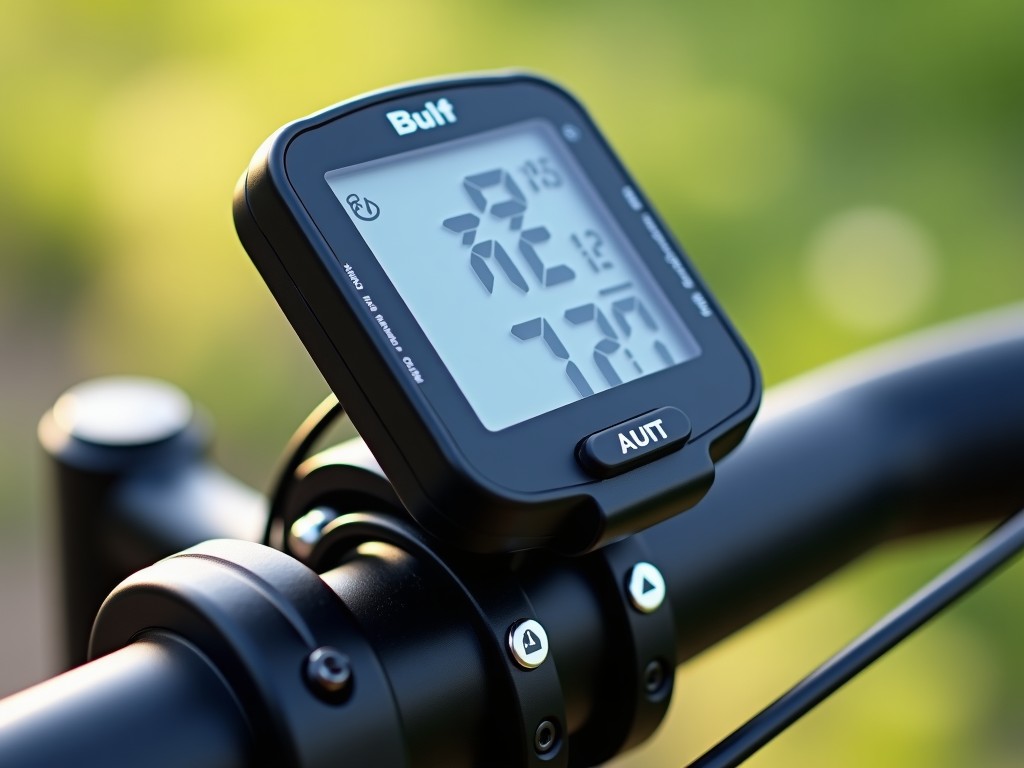
Bulk Auto Wake Up Cycling Bicycle Speedometer
Bulk Auto Wake Up Cycling Bicycle Speedometer
This device measures bicycle speed and distance using a magnetic reed sensor or Hall-effect wheel sensor, and includes an auto‑wake‑up function that powers the unit from sleep mode when motion is
- Categories:Bicycle Speedometer
Bulk Auto Wake-Up Cycling Bicycle Speedometer
This device measures bicycle speed and distance using a magnetic reed sensor or Hall-effect wheel sensor, and includes an auto‑wake‑up function that powers the unit from sleep mode when motion is detected.
Technical Overview
The speedometer remains in a low‑power sleep state drawing typically < 1 µA until the wheel sensor generates a pulse exceeding a preset threshold, at which point the microcontroller wakes, activates the LCD display, and begins processing speed data.
Power is supplied by a replaceable coin cell (e.g., CR2032) selected for its low self‑discharge and ability to support intermittent wake‑up cycles over a multi‑year lifespan.
The sensor interface is compatible with standard 2‑wire magnetic reed switches or three‑wire Hall‑effect units, allowing flexibility for different wheel sizes and mounting positions.
Key Specifications
| Parameter | Typical Value | Notes |
|---|---|---|
| Speed measurement range | 0–120 km/h | Limited by wheel circumference and pulse frequency |
| Resolution | 0.1 km/h | Displayed on 4‑digit LCD |
| Update rate | 1 Hz (once per second) | After wake‑up, updates each wheel revolution |
| Battery life | ≥ 2 years (typical use) | Based on 1 h/day active cycling |
| Operating temperature | -20 °C to +60 °C | Industrial grade components |
| Ingress protection | IP65 | Dust tight, protected against water jets |
| Dimensions (L×W×H) | 48 mm × 30 mm × 15 mm | Excluding sensor cable |
Features
- Auto wake‑up from sleep reduces average current draw to < 2 µA.
- Hall‑effect sensor option eliminates mechanical wear and provides consistent pulse width.
- LCD with optional backlight for low‑light readability.
- User‑configurable wheel circumference via two‑button setup.
- Reverse polarity protection on battery holder.
- Conformal coated PCB for humidity resistance.
Applications
Bulk purchasing is common among bike‑sharing operators, fleet maintenance providers, and OEMs that integrate speedometers into new bicycle models. The auto wake‑up feature minimizes maintenance visits because the unit remains dormant during storage or transport, preserving battery life.
The IP65 rating allows installation on frames exposed to rain, mud, and dust, while the wide temperature range supports deployment in climates from northern Europe to subtropical regions.
Manufacturing Considerations
The PCB uses FR‑4 with 1 oz copper and a solder mask that complies with UL‑94 V‑0. Components are selected for extended temperature tolerance and low leakage currents. Assembly follows IPC‑A‑610 Class 2 standards, with optional Class 3 for higher reliability requirements.
Each unit undergoes functional testing at three points: sensor wake‑up threshold, LCD segment integrity, and battery voltage under load. A statistical process control (SPC) system monitors drift in sensor sensitivity across production lots.
Quality Control
Final inspection includes a 24‑hour burn‑in cycle at 40 °C to verify stability of the microcontroller oscillator and LCD driver. Units are then subjected to a 30‑minute salt‑mist test (ASTM B117) to confirm IP65 sealing effectiveness.
Calibration certificates are available upon request, documenting the measured speed error against a reference wheel encoder traceable to ISO 17025.
Customization Options
- Firmware adjustments for different wheel circumference ranges or units (mph/kph).
- Connector types: JST‑PH, Molex Pico‑Blade, or bare wire with strain relief.
- Alternative display modules: transflective LCD or low‑power OLED.
- Custom labeling, laser‑etched serial numbers, or barcode integration.
- Optional magnetic reed switch kit with adhesive mount.
Get More Information
To discuss volume pricing, lead times, or specific configuration requirements, please contact our sales engineering team.
Request QuoteThis device measures bicycle speed and distance using a magnetic reed sensor or Hall-effect wheel sensor, and includes an auto‑wake‑up function that powers the unit from sleep mode when motion is
Send Inquiry
If you are interested in our products, leave your information here and we will be in touch shortly.