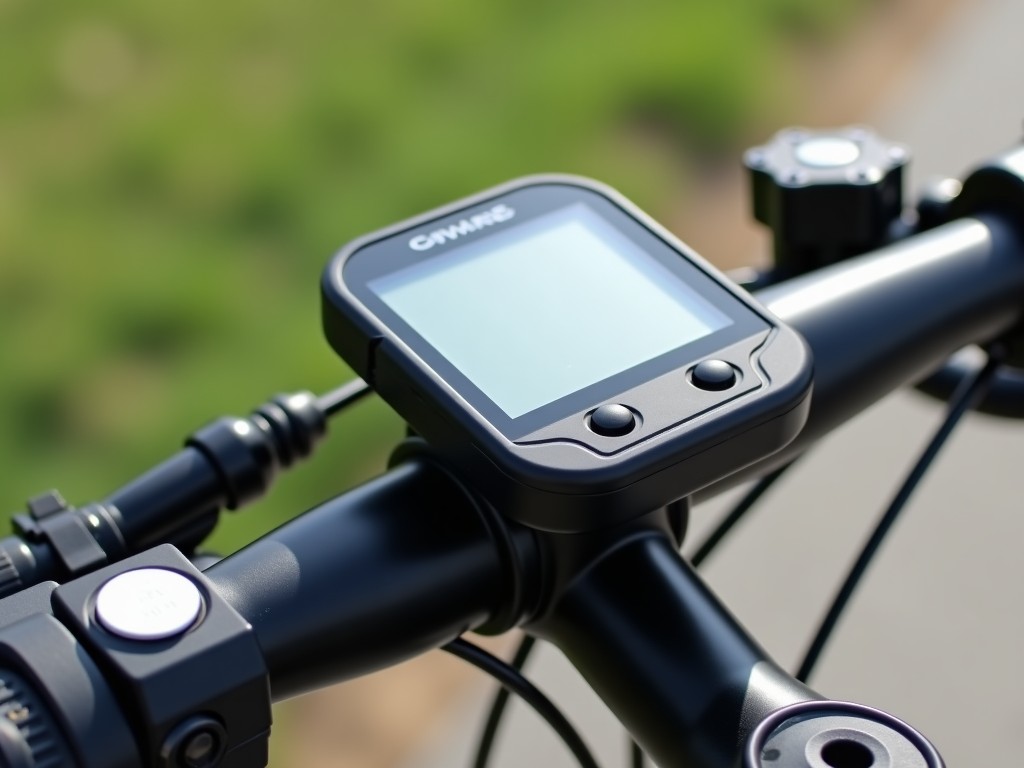
Commercial Solar Powered Wireless Bicycle Speedometer For Sale
Commercial Solar Powered Wireless Bicycle Speedometer For Sale
This device measures bicycle speed using a non-contact magnetic sensor, processes the data with a low‑power microcontroller, and transmits the reading via a 2.4 GHz wireless link to a display unit.
- Categories:Bicycle Speedometer
Commercial Solar Powered Wireless Bicycle Speedometer
This device measures bicycle speed using a non-contact magnetic sensor, processes the data with a low‑power microcontroller, and transmits the reading via a 2.4 GHz wireless link to a display unit. Power is harvested from an integrated monocrystalline solar panel that charges a lithium‑iron‑phosphate storage cell, allowing continuous operation without external wiring.
Principle of Operation
A Hall‑effect sensor detects the passage of each magnet attached to the wheel spokes. The sensor outputs a pulse per revolution; the firmware counts pulses over a one‑second window to calculate revolutions per minute, then converts to linear speed using the wheel circumference entered during setup. The measured speed is packetized and sent every 500 ms to the companion display using IEEE 802.15.4 compatible radio.
Key Specifications
| Parameter | Typical Value |
|---|---|
| Solar panel type | Monocrystalline Si, 0.5 W peak |
| Storage cell | LiFePO₄, 300 mAh |
| Wireless frequency | 2.400–2.483 GHz ISM |
| Update rate | 2 Hz (every 500 ms) |
| Speed measurement range | 0–80 km/h |
| Accuracy | ±0.5 km/h or ±2 % of reading, whichever greater |
| Operating temperature | -20 °C to +60 °C |
| Ingress protection | IP66 (sensor unit) |
| Weight (sensor + solar) | 45 g |
| Dimensions (L×W×H) | 58 mm × 30 mm × 12 mm |
Materials and Construction
The sensor housing is made from UV‑stabilized polycarbonate with a tensile strength of 65 MPa, providing impact resistance to 5 J drops. The solar panel is encapsulated in ethylene‑vinyl acetate (EVA) and a tempered glass cover, yielding a typical degradation rate of <0.5 % per year. Electrical connections use tin‑plated copper traces with a 2 µm gold flash to prevent corrosion in humid environments.
Wireless Communication
Transmission power is limited to 0 dBm to comply with regional ISM regulations, providing a line‑of‑sight range of up to 30 m. The protocol employs acknowledgment‑based retransmission; packet loss remains under 1 % in typical urban riding conditions. Frequency hopping across 16 channels reduces interference from other 2.4 GHz devices.
Applications
- Fleet‑management bicycles where wiring is impractical due to frequent frame changes.
- Shared‑mobility programs requiring a sealed enclosure that prevents unauthorized access and self‑powered telemetry.
- Delivery‑service e‑bikes needing real‑time speed monitoring for safety compliance.
- Police or security patrols that require instrumentation with no periodic battery replacement or wiring checks.
Quality Control Philosophy
Each unit undergoes functional testing at three temperature points (-20 °C, 25 °C, 50 °C) to verify solar charging efficiency remains above 80 % of nominal. Radio range is measured in an anechoic chamber; units falling below 25 m are rejected. Final inspection includes a 48‑hour soak test at 85 % relative humidity to confirm IP66 integrity.
Frequently Asked Questions
- Can the solar panel be replaced?
- The panel is laminated to the housing; replacement requires returning the unit to the factory for re‑sealing.
- What wheel sizes are supported?
- Speed calculation uses a user‑entered circumference; the sensor works with any wheel from 20 inch to 29 inch.
- Is firmware upgradable?
- A hidden service port allows over‑the‑air updates via a dedicated dongle; the process is encrypted with AES‑128.
This device measures bicycle speed using a non-contact magnetic sensor, processes the data with a low‑power microcontroller, and transmits the reading via a 2.4 GHz wireless link to a display unit.
Send Inquiry
If you are interested in our products, leave your information here and we will be in touch shortly.