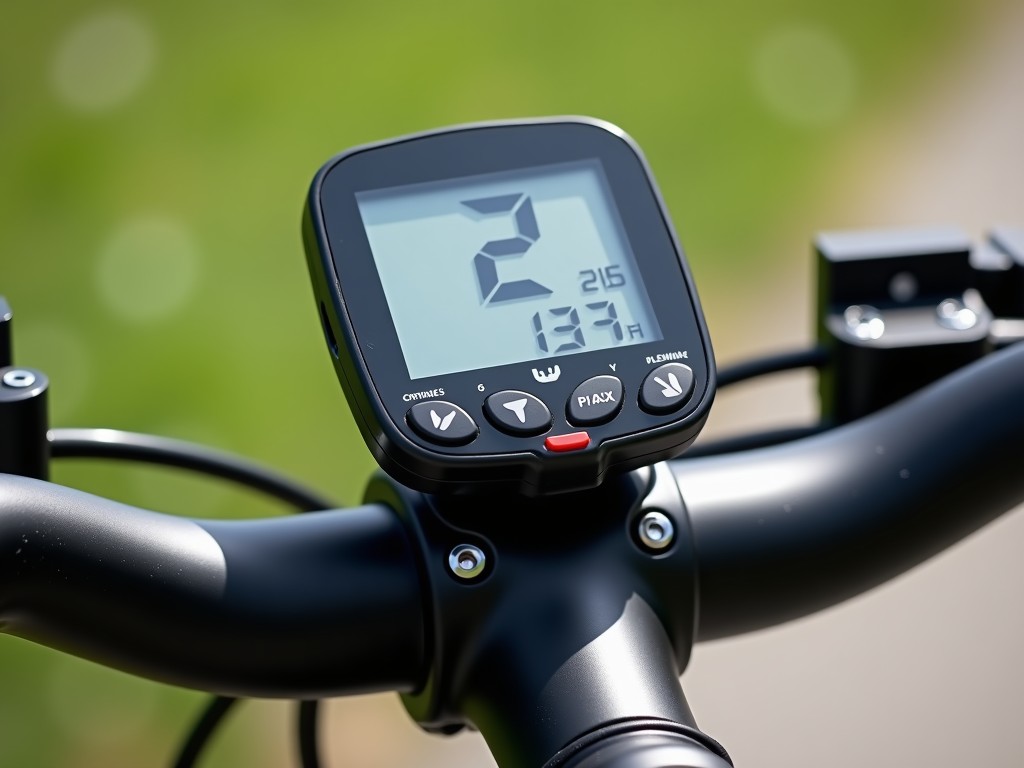
Custom Digital Lcd Bicycle Speedometer Manufacturer
Custom Digital Lcd Bicycle Speedometer Manufacturer
This section explains the core measurement principle, display technology, and typical performance parameters that define a custom digital LCD speedometer for bicycles. Understanding these details
- Categories:Bicycle Speedometer
Custom Digital LCD Bicycle Speedometer
This section explains the core measurement principle, display technology, and typical performance parameters that define a custom digital LCD speedometer for bicycles. Understanding these details helps engineers evaluate suitability for specific frame designs, power budgets, and environmental conditions.
Key Technical Specifications
| Parameter | Typical Value / Range |
|---|---|
| Speed Measurement Range | 0–120 km/h (0–75 mph) |
| Resolution | 0.1 km/h increments |
| Update Rate | 10 Hz (100 ms) |
| Display Type | 128×64 pixel monochrome LCD, LED backlight optional |
| Supply Voltage | 3.0–5.5 VDC (regulated) |
| Operating Temperature | -20 °C to +60 °C |
| Ingress Protection | IP65 (dust‑tight, water jet resistant) |
Customization Options
- Display segment layout – configurable symbols for speed, odometer, trip, cadence, and custom icons.
- Backlight color – white, amber, or red LED with adjustable brightness levels.
- Housing material – ABS, polycarbonate, or glass‑filled nylon for varying impact resistance.
- Mounting interface – handlebar clamp diameters from 22.2 mm to 31.8 mm, or integrated stem mounts.
- Sensor compatibility – Hall‑effect wheel speed sensor, reed switch, or Bluetooth LE input for smartphone pairing.
- Firmware features – selectable units (km/h/mph), auto‑sleep, wheel circumference calibration, and data logging via UART.
Typical Applications
Original equipment manufacturers integrate this speedometer into commuter e‑bikes where a compact, low‑power display is required to meet regulatory speed‑limit labeling. The IP65 rating allows reliable operation in urban environments exposed to rain and road spray, while the configurable backlight supports night‑time readability without draining the battery.
Performance‑oriented road bike builders use the high‑resolution LCD to show cadence‑derived speed when paired with a crank‑mounted sensor, enabling riders to monitor effort without adding a separate head unit. The ability to log trip data via a simple serial interface assists in post‑ride analysis for training programs.
Quality Assurance & Testing
Each unit undergoes functional verification at three temperature points (-20 °C, 25 °C, 60 °C) to confirm measurement accuracy within ±0.5 km/h across the full speed range. Housing seals are subjected to a 30‑minute water jet test per IEC 60529 to validate IP65 compliance before shipment.
Electrical stress testing includes 1000 hour humidity bias at 85 % RH and 85 °C, followed by functional check to detect any drift in LCD contrast or sensor interface. Final inspection checks for dead pixels, uniform backlight intensity, and secure fastener torque.
Frequently Asked Questions
- Can the wheel circumference be programmed? Yes, the firmware accepts a user‑entered circumference value via UART or button sequence to calibrate speed reading.
- What information is required for a quotation? Required details include desired display layout, housing material, sensor type, mounting diameter, order quantity, and any special certification needs.
- Which materials are available for the case? Standard options are ABS (impact resistant, cost effective), polycarbonate (higher temperature tolerance), and glass‑filled nylon (enhanced rigidity).
- How is quality inspected before shipping? Each lot receives a 10 % visual audit, functional test at temperature extremes, and seal integrity verification per the procedures described above.
- What packaging methods protect the units during transit? Units are placed in anti‑static trays, separated by corrugated dividers, and packed in double‑wall cartons with 120 gsm moisture barrier.
- What is the typical production lead time? Lead time ranges from 4 to 6 weeks after receipt of final specifications, depending on tooling requirements for custom housings.
- How can samples be arranged? Sample units are provided upon receipt of a signed NDA and a purchase order for the sample quantity; shipping charges apply.
Contact for Technical Inquiry
To discuss your specific requirements, request a detailed quotation, or obtain application notes, please use the contact form below.
Submit InquiryThis section explains the core measurement principle, display technology, and typical performance parameters that define a custom digital LCD speedometer for bicycles. Understanding these details
Send Inquiry
If you are interested in our products, leave your information here and we will be in touch shortly.