Custom High Precision Stopwatch Bicycle Speedometer Producer
Custom High Precision Stopwatch Bicycle Speedometer Producer
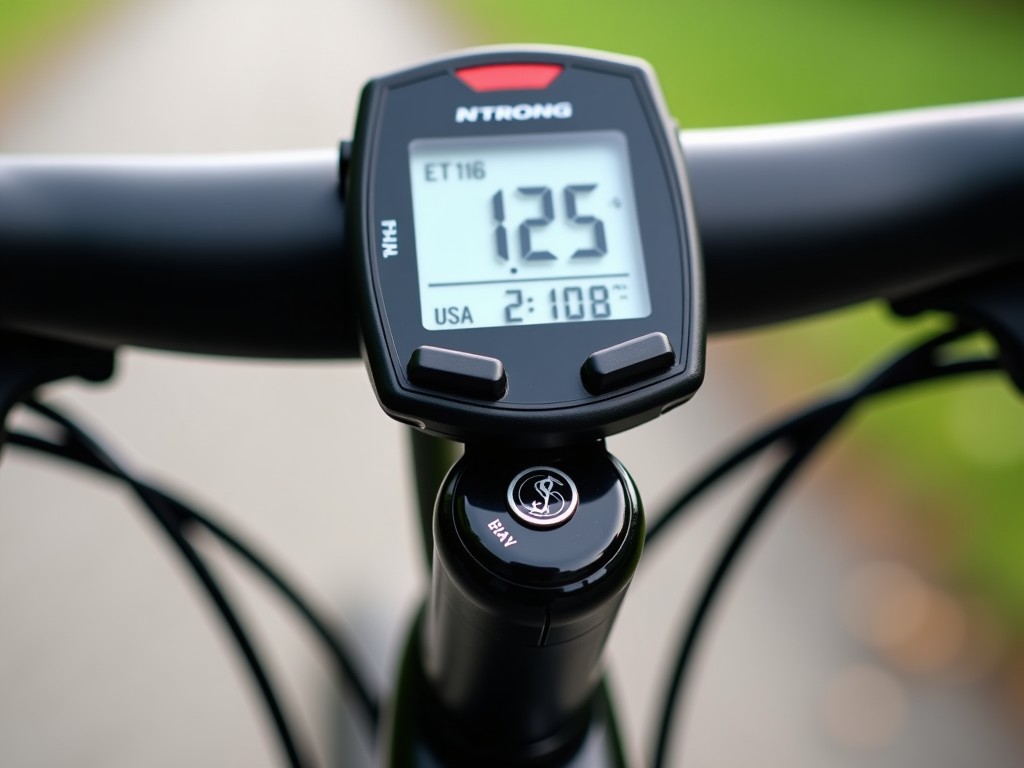
A bicycle speedometer that integrates stopwatch functionality provides simultaneous measurement of instantaneous speed and elapsed time. The device is mounted on the handlebar or seatpost and
- Categories:Bicycle Speedometer
Custom High Precision Stopwatch Bicycle Speedometer
Overview
A bicycle speedometer that integrates stopwatch functionality provides simultaneous measurement of instantaneous speed and elapsed time. The device is mounted on the handlebar or seatpost and processes wheel‑rotation pulses to compute velocity while counting intervals for lap or split timing. This combination supports training analysis, performance validation, and research where precise temporal and speed data are required.
Technical Specifications
| Parameter | Typical Value | Customizable Options |
|---|---|---|
| Speed measurement range | 0 – 120 km/h | Extended to 200 km/h on request |
| Timing resolution | 0.01 s | 0.001 s available for high‑speed testing |
| Display type | Transflective LCD | OLED, back‑lit LCD, custom colour schemes |
| Sampling rate | 100 Hz | 200 Hz for dynamic load studies |
| Power supply | 3.7 V Li‑ion rechargeable (500 mAh) | Solar assist, external USB‑C power |
| Housing material | ABS‑PC blend | Carbon‑fiber reinforced polyamide, aluminium insert |
| Ingress protection | IP65 | IP67 for submerged applications |
| Operating temperature | −20 °C to +50 °C | Extended −40 °C to +85 °C with thermal management |
| Dimensions (L×W×H) | 70 mm × 45 mm × 20 mm | Scalable to 80 mm × 50 mm × 25 mm for larger displays |
| Weight | 45 g | 30 g with lightweight housing |
| Wireless interface | Bluetooth 5.0 | ANT+, NFC for device pairing |
| Data output | USB‑C (5 V, 500 mA) | Wireless LAN, CAN bus |
Applications
Competitive cyclists use the device to quantify interval intensity by correlating speed spikes with timed efforts, enabling precise workload distribution. Manufacturers employ it during dynamometer validation to verify that speed‑sensor firmware matches real‑world wheel‑rotation data under controlled loads. Biomechanics labs mount the unit on test bicycles to capture synchronized speed and timing curves for pedal‑force analysis, reducing the need for separate timing gates and speed sensors.
In addition, cycling‑coach education programs rely on the stopwatch function to prescribe rest periods based on elapsed time rather than distance, ensuring consistent recovery intervals across varied terrain. The product’s ability to output raw pulse counts via USB‑C also allows integration with data‑logging systems for long‑term endurance studies where battery life and environmental sealing are critical.
Customization Options
- Measurement units: km/h, mph, m/s, selectable via firmware
- Display colour: monochrome amber, green, or custom RGB backlight
- Mounting brackets: handlebar clamp, seatpost strap, quick‑release adapter
- Firmware enhancements: cadence integration, lap counter, auto‑start/stop based on speed threshold
- Connector types: right‑angle USB‑C, pogo‑pin docking, wireless charging pad
- Calibration certificates: traceable to national standards, optional ISO‑17025 accreditation
Quality Control & Testing
Each unit undergoes a speed‑accuracy test against a calibrated laser‑Doppler velocimeter with uncertainty ≤ 0.1 % across the full range. Timing verification is performed using a GPS‑disciplined reference clock providing sub‑millisecond alignment over 24‑hour soak cycles. Environmental validation includes temperature shock (−20 °C to +50 °C), humidity exposure (95 % RH, 48 h), and vibration sweep (10‑2000 Hz, 2 g) to confirm ingress protection and mechanical integrity.
Functional inspection checks display contrast under direct sunlight, button actuation force (0.8 N ± 0.2 N), and wireless packet loss rate (< 0.5 % at 10 m). Final audit reviews traceability logs, firmware checksum, and packaging seal integrity before release. This structured approach reduces field failure risk and supports long‑term reliability expectations of industrial customers.
FAQ
- Can the measurement range be extended beyond 120 km/h? Yes, firmware and hardware options allow up to 200 km/h, subject to sensor selection and validation.
- What information is required for a quotation? Desired speed range, timing resolution, display type, housing material, mounting method, quantity, and any certification needs.
- Which materials are available for the housing? Standard ABS‑PC blend, carbon‑fiber reinforced polyamide, and aluminium inserts; other polymers upon request.
- How is quality inspected? Each unit receives speed accuracy, timing, environmental, and functional tests as described in the quality control section.
- What packaging options are offered? Anti‑static bags, individual foam inserts, bulk cartons with corner protection, and custom‑printed boxes.
- How are export shipments protected? Units are sealed in moisture‑barrier bags, placed in shock‑absorbent cartons, and marked with handling labels per ISPM‑15.
- What is the typical production lead time? Four to six weeks for standard configurations; custom projects depend on tooling and material availability.
- Can samples be arranged before a production order? Yes, functional samples are provided after design confirmation, with shipping costs covered by the requester.
Contact for Quote
To discuss your specific requirements and receive a detailed quotation, please use the inquiry form below.
Request a QuoteA bicycle speedometer that integrates stopwatch functionality provides simultaneous measurement of instantaneous speed and elapsed time. The device is mounted on the handlebar or seatpost and
Send Inquiry
If you are interested in our products, leave your information here and we will be in touch shortly.