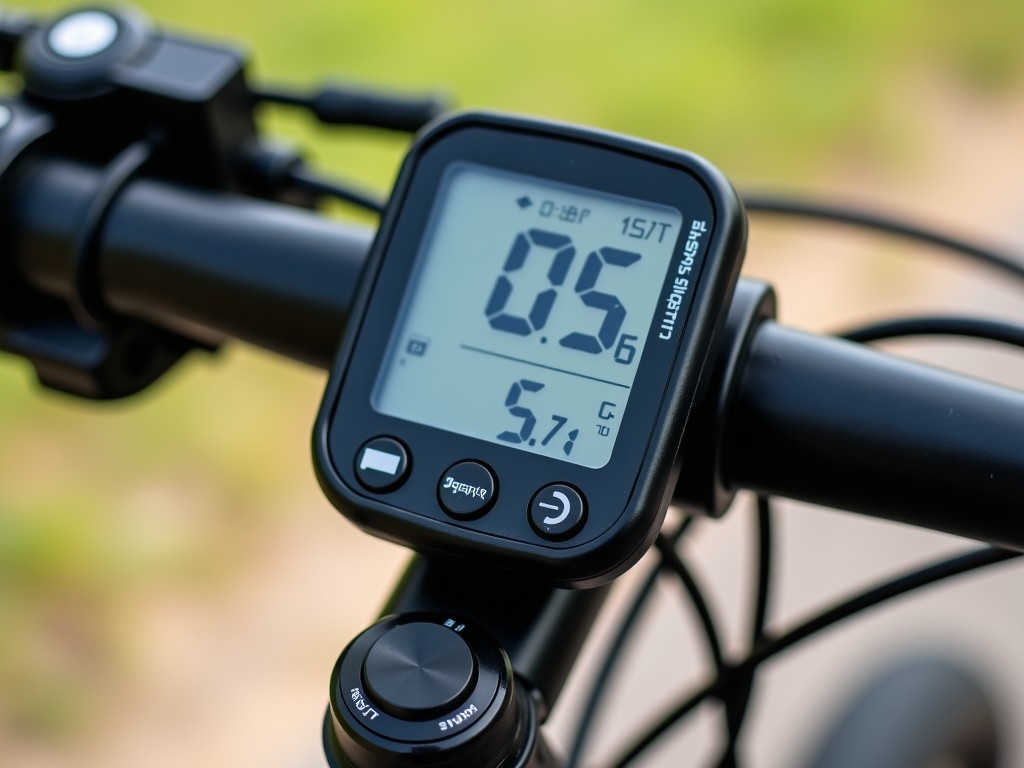
Custom Logo Calorie Counter Bicycle Speedometer Vendor
Custom Logo Calorie Counter Bicycle Speedometer Vendor
The unit integrates a Hall‑effect speed sensor with a proprietary MET‑based algorithm to provide real‑time velocity and estimated calorie expenditure on a sunlight‑readable LCD. Parameter Typical
- Categories:Bicycle Speedometer
Custom Logo Calorie Counter Bicycle Speedometer
Product Overview
The unit integrates a Hall‑effect speed sensor with a proprietary MET‑based algorithm to provide real‑time velocity and estimated calorie expenditure on a sunlight‑readable LCD.
Technical Specifications
| Parameter | Typical Value | Notes / Customization |
|---|---|---|
| Speed measurement range | 0–80 km/h | Adjustable via firmware |
| Calorie calculation method | MET‑based, user‑weight input | Weight range 40–150 kg |
| Display type | Transflective LCD, 2.4‑inch | Optional OLED upgrade |
| Display resolution | 320×240 pixels | Customizable segment layout |
| Battery life | Up to 25 hours continuous | Low‑power sleep mode available |
| Operating temperature | -10 °C to +50 °C | Industrial grade components |
| Water resistance | IP67 (static) | Optional IP68 for harsh environments |
| Housing material | Glass‑filled polycarbonate | Color options: black, gray, custom |
| Mounting options | Tool‑free silicone strap, bolt‑on bracket | OEM‑specific adapters available |
| Custom logo area | 20 mm × 10 mm recess | Laser‑etched, pad‑printed, or UV‑full‑color |
Key Features
- Integrated Hall‑effect sensor with <±0.5 km/h accuracy
- Proprietary MET algorithm updates calorie estimate every second
- Sunlight‑readable transflective LCD with auto‑brightness
- Low‑power sleep mode (<0.5 mA) extends field life
- Tool‑free silicone strap enables quick bike changes
- IP67 sealed enclosure protects against dust and water ingress
- Laser‑etched logo capability provides permanent, wear‑resistant branding
- Firmware updates via USB‑C port for future feature expansion
Applications
Original equipment manufacturers of fitness bicycles, e‑bikes, and indoor trainers incorporate this device to offer riders immediate performance feedback while reinforcing brand identity through a custom logo. Health‑monitoring programs benefit from the continuous calorie estimate, which supports goal‑setting and usage analytics without requiring external smartphone apps.
Customization Options
Buyers can specify the logo reproduction method, placement, and color to match corporate branding guidelines. The recessed area accommodates laser‑etched monochrome marks for durability, pad‑printed spot colors for precise Pantone matching, or UV‑cured full‑color graphics for complex artwork.
- Logo methods: laser etching, pad printing, UV full‑color
- Placement: top cover, side bezel, or rear housing
- Color choices: standard black/gray housing, custom RAL/Pantone
- Additional options: custom firmware defaults, unique packaging inserts
Quality Assurance
Each unit undergoes incoming sensor verification, functional calibration against a reference wheel, and a 48‑hour burn‑in cycle to stabilize electronic drift. Visual inspection checks logo fidelity, housing integrity, and label placement before final functional testing validates speed, calorie, and display performance across the operating temperature range.
Frequently Asked Questions
Can the speed sensor be recalibrated in the field? Yes, the device includes a calibration mode accessible via a button sequence that allows adjustment to a known reference speed.
What file formats are accepted for logo artwork? Vector formats (AI, EPS, SVG) are preferred for laser etching and pad printing; high‑resolution raster (PNG, TIFF) works for UV full‑color.
Is the battery user‑replaceable? The unit uses a sealed Li‑ion cell designed for the product lifetime; replacement is performed by the manufacturer during service intervals.
What is the typical lead time for a customized order? Standard configurations ship within 3–4 weeks; logo‑customized lots typically require 5–6 weeks depending on artwork approval and production queue.
The unit integrates a Hall‑effect speed sensor with a proprietary MET‑based algorithm to provide real‑time velocity and estimated calorie expenditure on a sunlight‑readable LCD. Parameter Typical
Send Inquiry
If you are interested in our products, leave your information here and we will be in touch shortly.