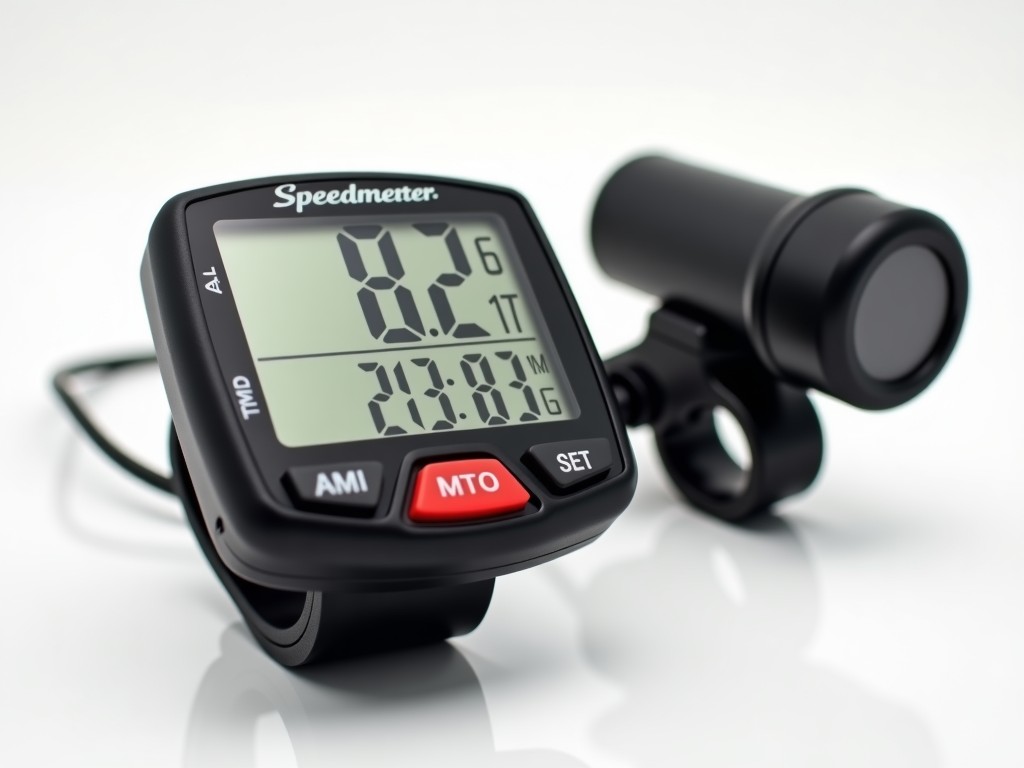
High Quality Bicycle Speedometer With Cadence Sensor Wholesaler
High Quality Bicycle Speedometer With Cadence Sensor Wholesaler
This device combines a wheel‑based speed sensor with a crank‑based cadence sensor in a single housing, providing simultaneous measurement of linear velocity and pedal revolutions. The speed
- Categories:Bicycle Speedometer
high quality bicycle speedometer with cadence sensor wholesaler
This device combines a wheel‑based speed sensor with a crank‑based cadence sensor in a single housing, providing simultaneous measurement of linear velocity and pedal revolutions. The speed measurement uses a Hall‑effect sensor detecting magnetic pulses from a spoke‑mounted magnet, while cadence is captured by a second Hall‑effect sensor monitoring a crank‑arm mounted magnet. Both channels output digital pulses that are processed to deliver real‑time data compatible with ANT+ and Bluetooth Low Energy profiles.
Technical Overview
The speed sensor operates at a pulse frequency proportional to wheel rotation; with a typical 20‑spoke magnet configuration, each wheel revolution generates 20 pulses, allowing a resolution of 0.1 km/h at 1 Hz update rate. The cadence sensor similarly produces pulses per crank revolution, providing a resolution of 1 rpm across the usable range of 30–180 rpm.
Key Specifications
| Parameter | Value | Unit |
|---|---|---|
| Speed measurement range | 0 – 120 | km/h |
| Speed resolution | 0.1 | km/h |
| Speed update rate | 1 | Hz |
| Cadence measurement range | 30 – 180 | rpm |
| Cadence resolution | 1 | rpm |
| Operating temperature | -20 to +60 | °C |
| Ingress protection | IP67 | – |
| Power consumption (typical) | <10 | mA |
| Battery life (CR2032) | ≈500 | hours |
Working Principle
A small neodymium magnet is affixed to a spoke; as the wheel turns, the magnet passes the Hall‑effect sensor mounted on the fork or chainstay, generating a voltage pulse each time. The sensor’s output is conditioned and counted by an onboard microcontroller, which converts pulse count to speed using the known wheel circumference.
Similarly, a second magnet on the crank arm passes a second Hall‑effect sensor near the bottom bracket. The cadence channel counts pulses per crank revolution, providing rpm. Both channels are time‑stamped and transmitted via a 2.4 GHz radio using either ANT+ (device type: Speed/Cadence) or Bluetooth Low Energy (Cycling Speed and Cadence profile).
Applications
- Fleet‑management companies install the sensor on service bicycles to monitor rider effort and schedule preventive maintenance based on actual usage data.
- Bicycle‑sharing operators integrate the speed/cadence data into their telematics platform to optimize redistribution algorithms and improve user experience.
- Original equipment manufacturers (OEMs) embed the unit into e‑bike drive systems as a low‑cost, dual‑channel alternative to separate speed and cadence modules.
- Sports‑training facilities use the synchronized output to analyze pedaling efficiency and power‑output estimation when paired with torque‑sensing cranks.
Quality Assurance
Each unit undergoes functional testing at three temperature points (−20 °C, 25 °C, 60 °C) to verify speed and cadence accuracy within ±0.5 km/h and ±2 rpm respectively. The Hall‑effect sensors are screened for magnetic offset and hysteresis before assembly.
Ingress protection is validated by immersion testing per IEC 60529; IP67 certification confirms resistance to temporary submersion and dust ingress. Electrical endurance is checked with a 500‑hour cyclic load test simulating real‑world vibration and temperature cycling.
Customization Options
- Magnet quantity and placement (spoke count, crank position) adjustable to match different wheel sizes and frame geometries.
- Housing material choice: UV‑stabilized polycarbonate or glass‑filled nylon for increased impact resistance.
- Connector type: JST‑PH, Molex Pico‑Blade, or bare wire with heat‑shrink termination.
- Firmware parameters: selectable ANT+ network key, Bluetooth device name, transmission interval (200 ms to 2 s).
Frequently Asked Questions
- Can the sensor be supplied with a custom cable length?
- Yes. Cable length can be specified from 100 mm up to 500 mm in 50 mm increments, with optional shielding for electrically noisy environments.
- What information is required to obtain a quotation?
- Required details include: desired quantity, housing material, magnet configuration, connector type, firmware preset (ANT+ only, BLE only, or dual), and any required documentation (e.g., RoHS, REACH).
- How is quality inspected before shipment?
- Each batch receives a 100 % functional test, a sample undergoes accelerated life testing (1000 h at 85 °C/85 % RH), and a random selection is checked for IP67 compliance via immersion.
Get a Quote
To discuss volume pricing, lead times, or specific customization, please provide your project requirements.
Request QuotationThis device combines a wheel‑based speed sensor with a crank‑based cadence sensor in a single housing, providing simultaneous measurement of linear velocity and pedal revolutions. The speed
Send Inquiry
If you are interested in our products, leave your information here and we will be in touch shortly.