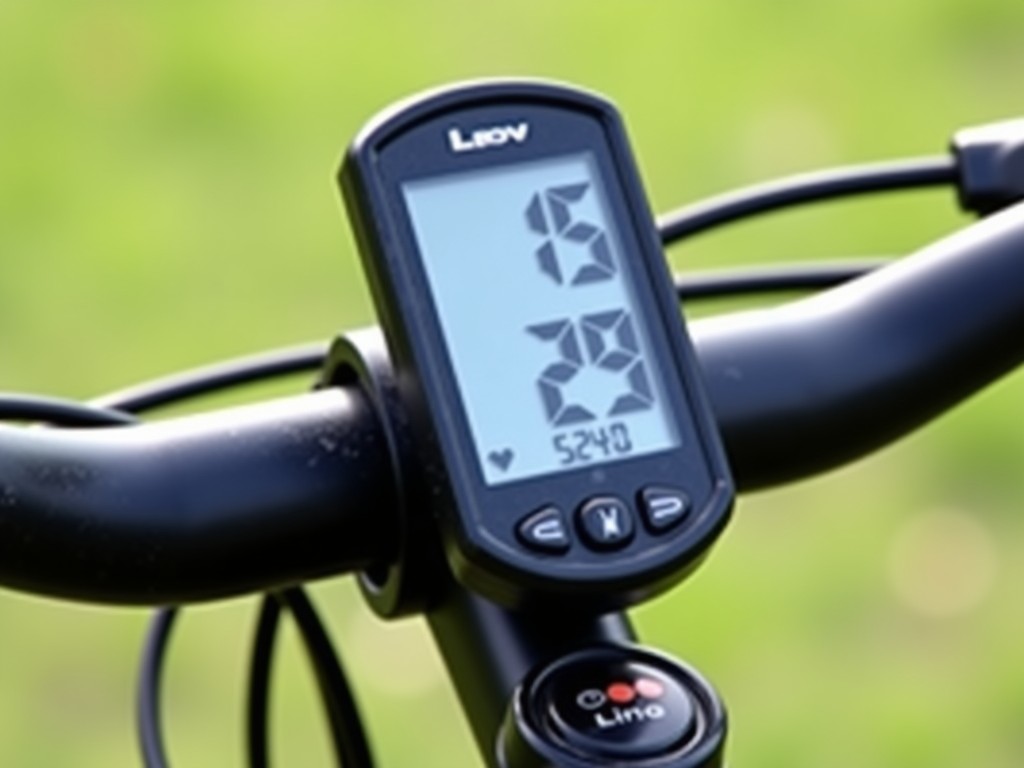
Oem Heart Rate Monitor Bicycle Speedometer Company
Oem Heart Rate Monitor Bicycle Speedometer Company
This module combines a photoplethysmography (PPG) heart‑rate sensor with a magnetic‑induction speed pickup to deliver simultaneous cardiovascular and velocity data from a bicycle crank or wheel. The
- Categories:Bicycle Speedometer
OEM Heart Rate Monitor Bicycle Speedometer
Product Overview
This module combines a photoplethysmography (PPG) heart‑rate sensor with a magnetic‑induction speed pickup to deliver simultaneous cardiovascular and velocity data from a bicycle crank or wheel. The fused output is provided as a calibrated digital stream suitable for real‑time display, logging, or transmission to a head unit.
Power consumption averages 8 mA at 3.3 V during active sensing, dropping below 0.5 mA in sleep mode, which enables battery‑operated designs for up to 200 hours on a 200 mAh cell.
The enclosure meets IP65 rating, resisting water spray and dust ingress while maintaining a total mass of 12 g, facilitating lightweight integration into handlebar stems or seat‑post clamps.
Technical Specifications
| Parameter | Typical Value | Unit | Remarks |
|---|---|---|---|
| Heart‑rate measurement range | 30–240 | bpm | ±2 bpm accuracy after calibration |
| Speed measurement range | 0–120 | km/h | Resolution 0.1 km/h |
| Operating voltage | 2.7–5.5 | V | Regulated internal LDO |
| Output interface | UART (TTL) / I²C | – | Selectable via firmware |
| Operating temperature | -20 to +60 | °C | Industrial grade |
Sensing Technology
The heart‑rate channel uses a green‑LED PPG sensor with a 525 nm wavelength, sampling at 250 Hz to capture arterial pulsation through the skin. An adaptive filter removes motion artefacts induced by pedalling cadence up to 120 rpm.
Speed is detected by a Hall‑effect sensor reacting to a diametrically magnetized ring attached to the spindle; each revolution generates a clean pulse with <0.5 ms jitter, enabling sub‑kilometer‑per‑hour resolution after firmware interpolation.
Both channels share a 32‑bit MCU running a proprietary sensor‑fusion algorithm that outputs a single JSON‑like packet every 200 ms, reducing host‑processor load.
Mechanical Integration
The module is supplied as a 20 mm × 15 mm × 6 mm rectangular block with two M2 mounting holes spaced 12 mm apart, allowing attachment to standard bracket designs used on handlebars or seat posts.
A silicone over‑mold provides a Shore A 40 hardness interface that dampens vibration above 30 Hz, protecting the internal sensor die from shock loads encountered during rough‑terrain riding.
Cable exit options include a right‑angle micro‑USB‑style connector or a 4‑pin JST‑SH header, each with a strain‑relief boot rated for 10 kg pull force.
Electrical Interface
Default logic level is 3.3 V tolerant; inputs accept up to 5.5 V without damage. The UART operates at 115 200 baud, 8‑N‑1, while the I²C mode supports standard (100 kHz) and fast (400 kHz) speeds.
A built‑in power‑on reset circuit ensures stable start‑up after voltage sag down to 2.0 V, preventing undefined states in battery‑powered applications.
Optional firmware can enable a low‑energy Bluetooth 5.0 beacon mode, broadcasting heart‑rate and speed as ADV packets for smartphone apps.
Applications in Cycling and Fitness Equipment
OEMs integrate this sensor into smart bike computers to provide riders with accurate exertion metrics without requiring a chest strap, improving comfort and adoption rates.
Stationary bike manufacturers embed the module in the flywheel housing to capture cadence‑correlated power estimates, enabling calibrated resistance control based on real‑time heart‑rate zones.
Because the unit outputs a standardized digital stream, firmware developers can reuse existing Bluetooth‑ANT+ stacks, reducing integration time by an estimated 30 % compared with discrete sensor assemblies.
Customization Options
- Sensor placement – adjustable offset from mounting plane to accommodate different frame geometries.
- Firmware profile – selectable data packet rate (50 ms to 1 s), units (metric/imperial), and averaging windows.
- Housing colour – available in matte black, gloss white, or custom Pantone matched to brand.
- Cable length – standard 150 mm, with options up to 500 mm or custom over‑molded lengths.
- Connector type – micro‑USB, JST‑SH, Molex Pico‑Blade, or bare wire with tin‑plated ends.
Quality Assurance and Testing
Each unit undergoes a three‑stage validation: (1) automated optical inspection of LED alignment and solder joint integrity, (2) functional test at five heart‑rate set points (60, 100, 140, 180, 220 bpm) and three speed points (0, 30, 90 km/h) using calibrated reference equipment, (3) environmental cycling – 48 hours at ‑20 °C followed by 48 hours at +60 °C with humidity 85 % RH to confirm drift <1 % over the range.
Traceability is maintained via laser‑etched lot numbers linking to raw‑material certificates, enabling root‑cause analysis if a field deviation occurs.
Mean time between failures (MTBF) exceeds 150 000 hours based on accelerated life testing at 85 °C/85 % RH, supporting long‑term OEM warranties.
FAQ
Yes – the filter coefficients and peak‑detect thresholds are exposed through a configuration register; adjustment requires only a few minutes of bench testing with a reference ECG.
Please provide anticipated annual volume, required output protocol (UART/I²C/BLE), cable length and connector preference, and any environmental certifications (e.g., RoHS, REACH) that must be met.
Samples are shipped via express courier with a pre‑paid return label; typical lead time is 10‑12 working days after receipt of the signed NDA.
Standard warranty covers 24 months for material and workmanship defects, subject to the conditions outlined in the quality assurance section.
Contact for OEM Inquiry
To discuss integration details, request a formal quote, or obtain engineering samples, please reach out to our OEM support team.
This module combines a photoplethysmography (PPG) heart‑rate sensor with a magnetic‑induction speed pickup to deliver simultaneous cardiovascular and velocity data from a bicycle crank or wheel. The
Send Inquiry
If you are interested in our products, leave your information here and we will be in touch shortly.